
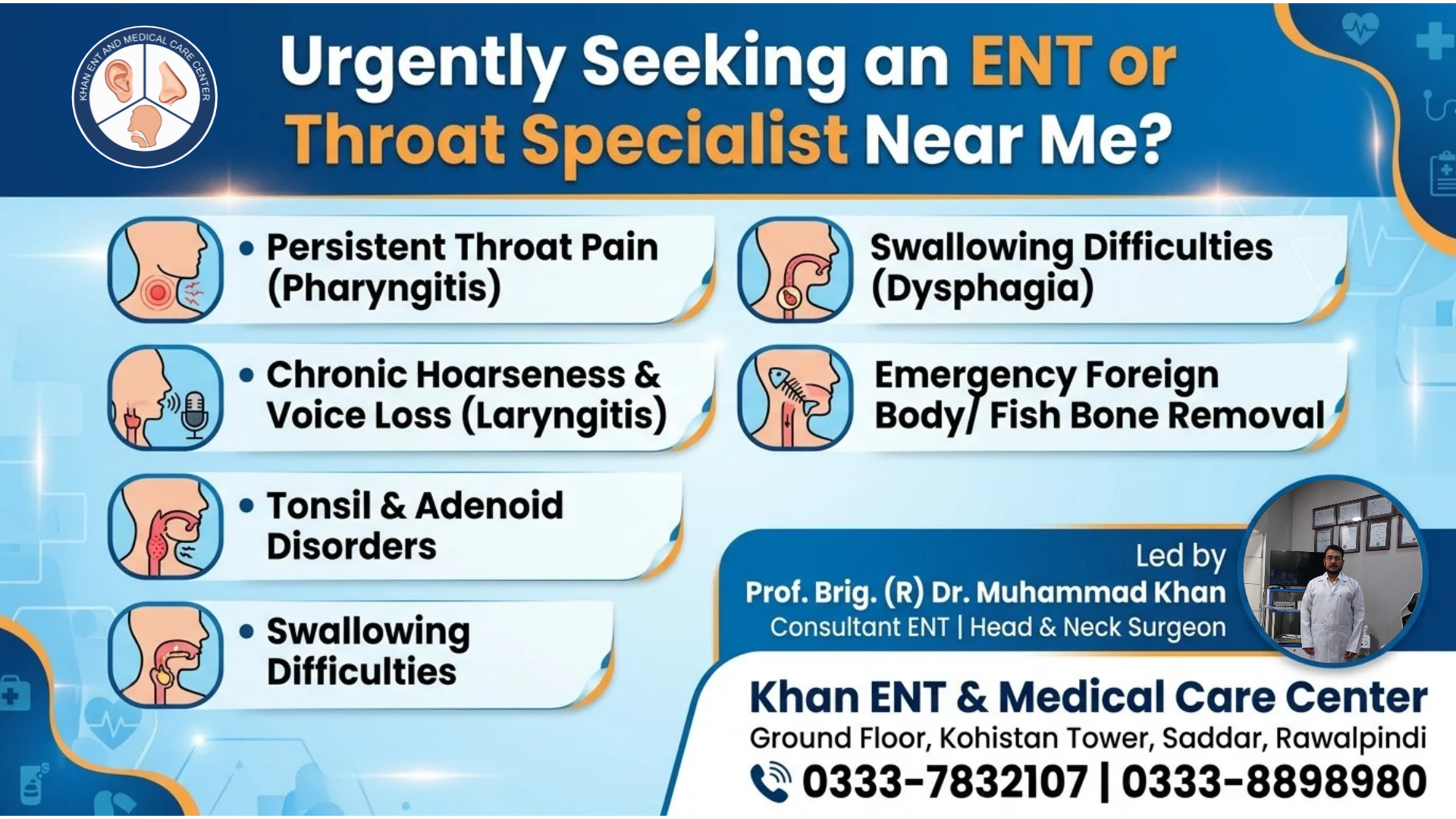
Persistent throat discomfort, chronic hoarseness, and painful swallowing can significantly impair your quality of life. When suffering from prolonged throat irritation, many patients search for a reliable throat specialist near me to understand whether their symptoms stem from chronic pharyngitis or laryngitis. Consulting a skilled throat specialist near me ensures you get an accurate medical diagnosis rather than relying on temporary home remedies.
While both conditions affect the upper respiratory tract and share overlapping symptoms such as throat soreness, dryness, and difficulty swallowing they involve distinct anatomical structures, carry different underlying causes, and require specialized treatment strategies from an experienced throat specialist near me.
Understanding the differences between chronic pharyngitis and laryngitis is essential for getting the right care, avoiding unnecessary antibiotic use, and finding a qualified throat specialist near me for timely expert intervention.
What Is Chronic Pharyngitis?
Chronic pharyngitis is an ongoing, long-term inflammation of the pharynx the anatomical region situated at the back of the throat behind the oral and nasal cavities. The pharynx serves as a dual passage for both food heading to the esophagus and air traveling toward the lungs. When dealing with ongoing irritation in this area, visiting a trusted throat specialist near me can help pinpoint the exact trigger.
When the mucosal lining of the pharynx becomes chronically inflamed, patients experience persistent discomfort that can linger for weeks, months, or recur frequently throughout the year.
In upper airway anatomy, the pharynx is the primary site affected in chronic pharyngitis, leading to persistent pain, rawness, and swallowing issues. If these symptoms persist, scheduling a visit with a throat specialist near me is highly recommended.
Common Symptoms of Chronic Pharyngitis
- Persistent Throat Rawness or Scratchiness: A constant sensation of irritation at the back of the throat.
- Foreign Body Sensation: Patients frequently describe feeling a "lump," "tickle," or persistent mucus stuck in the throat (globus sensation) that prompts constant throat clearing.
- Pain During Swallowing (Odynophagia): Pain that worsens during eating, drinking, or swallowing saliva.
- Throat Dryness: Dryness in the back of the throat, especially noticeable upon waking up.
- Mild Irritative Cough: A dry, non-productive cough triggered by persistent mucosal irritation.
Primary Causes of Chronic Pharyngitis
Unlike acute pharyngitis, which is usually caused by temporary viral or bacterial infections like strep throat, chronic pharyngitis is typically driven by non-infectious environmental, lifestyle, or systemic factors evaluated by a throat specialist near me:
- Laryngopharyngeal Reflux (LPR) / GERD: Stomach acid and digestive enzymes travel upward into the throat, irritating the delicate pharyngeal tissues.
- Environmental Irritants: Prolonged exposure to airborne pollutants, chemical fumes, secondhand tobacco smoke, or chronic dust.
- Chronic Mouth Breathing: Nasal congestion from septum deviation, nasal polyps, or allergies forces constant mouth breathing, drying out and inflaming the pharynx.
- Chronic Sinusitis & Post-Nasal Drip: Mucus continually draining down the back of the throat from infected or inflamed sinuses causes continuous tissue inflammation.
- Alcohol and Tobacco Use: Frequent alcohol consumption and smoking directly inflame the pharyngeal lining.
What Is Laryngitis?
Laryngitis is the inflammation of the larynx (the voice box), which houses the vocal cords. The larynx is located further down the throat, just above the trachea (windpipe). A dedicated throat specialist near me can examine the voice box directly using specialized endoscopic tools.
Under normal conditions, your vocal cords open and close smoothly, forming sounds through their movement and vibration. However, when the larynx becomes inflamed or swollen, the vocal cords swell, distorting the sound of air passing over them. This produces the hallmark sign of laryngitis: hoarseness or complete voice loss (aphonia).
Laryngitis can be acute (resolving within 1 to 2 weeks) or chronic (lasting longer than 3 weeks), both of which can be effectively diagnosed by a throat specialist near me.
Common Symptoms of Laryngitis
- Hoarseness or Raspy Voice: The most characteristic symptom, ranging from slight cracking of the voice to severe raspinness.
- Loss of Voice (Aphonia): Difficulty producing sound or speaking above a whisper.
- Tickling or Raw Sensation in the Larynx: Irritation localized deeper in the neck near the Adams apple.
- Dry, Frequent Cough: A persistent urge to cough or clear the throat to clear vocal cord friction.
- Mild Throat Discomfort: Unlike pharyngitis, pain is typically less dominant than voice dysfunction, though discomfort increases with voice use.
Primary Causes of Chronic Laryngitis
- Vocal Strain and Abuse: Overusing or straining the voice (frequent yelling, public speaking, singing, or talking loudly over background noise) causes vocal cord trauma.
- Gastroesophageal & Reflux Conditions: Acid reflux irritates the delicate vocal fold mucosa (reflux laryngitis).
- Inhaled Irritants & Allergens: Inhaling chemical vapors, allergen particles, or tobacco smoke directly damages the vocal fold tissues.
- Vocal Cord Lesions: Prolonged inflammation can lead to benign vocal cord nodules, polyps, or granulomas.
Key Differences: Chronic Pharyngitis vs. Laryngitis
To help you distinguish between these two upper respiratory conditions before visiting a throat specialist near me, consider these core points:
- Primary Anatomical Site: Chronic pharyngitis affects the pharynx (back of throat), while laryngitis affects the larynx (voice box and vocal cords).
- Hallmark Symptom: Chronic pharyngitis causes persistent raw throat pain and difficulty swallowing, whereas laryngitis leads to hoarseness, a raspy voice, or total voice loss.
- Impact on Voice: Voice remains largely unchanged in pharyngitis, but is significantly altered or absent in laryngitis.
- Swallowing Sensation: Pharyngitis causes significant pain or a feeling of a lump in the throat, while laryngitis presents with mild discomfort and swallowing usually remains intact.
- Primary Triggers: Pharyngitis is often triggered by post-nasal drip, dry air, acid reflux, or smoking. Laryngitis is commonly triggered by vocal strain, reflux, inhaled irritants, or viral illness.
When to Consult a Throat Specialist
While mild throat irritation often resolves with fluid intake and home remedies, prolonged symptoms require expert medical evaluation. Delaying evaluation for persistent throat issues can allow underlying conditions such as severe reflux, sinus disease, or vocal cord lesions to progress.
You should book an appointment with a qualified throat specialist near me if you notice any of the following warning signs:
- Symptom Duration: Throat pain, voice hoarseness, or throat irritation lasting longer than 2 to 3 weeks.
- Difficulty Breathing or Stridor: Any high-pitched breathing sound or shortness of breath.
- Severe Pain or Inability to Swallow: Inability to manage saliva, liquids, or solid foods.
- Unexplained Weight Loss or Lump in the Neck: Palpable neck masses, ear pain accompanying throat pain, or unexplained weight loss.
- Coughing Up Blood: Any traces of blood in phlegm or saliva.
Finding an experienced throat specialist near me allows for early screening and precise clinical management of these symptoms.
Advanced ENT Diagnosis & Treatment Solutions
Accurate diagnosis requires direct visualization of the upper aerodigestive tract. At a specialized clinic led by a top throat specialist near me, modern diagnostic tools are used to pinpoint the root cause of your symptoms.
Our diagnostic workup involves three key steps:
- Comprehensive Clinical Examination
- High-Definition Endoscopic Evaluation: Including nasopharyngoscopy for pharynx inspection and flexible laryngoscopy for vocal cord assessment.
- Targeted Treatment Protocol: Tailored reflux management, lifestyle adjustments, anti-inflammatory or antihistamine therapy, and voice rest with targeted vocal therapy.
Modern Diagnostic Protocols
- High-Definition Flexible Nasopharyngolaryngoscopy: A thin, flexible endoscope with an HD camera is gently passed through the nasal passage. This allows the doctor to directly view the pharynx, larynx, and vocal cords in real time without discomfort.
- Reflux & Allergy Evaluation: Assessing whether LPR or allergic rhinitis is contributing to chronic tissue irritation.
Comprehensive Treatment Approach
- Targeted Reflux Management: Protocol-driven management using proton pump inhibitors (PPIs), diet modification, and elevated head positions during sleep for acid-driven conditions.
- Sinus & Post-Nasal Drip Therapy: Nasal rinses, antihistamines, or targeted anti-inflammatory sprays to clear chronic sinus drainage.
- Voice Therapy & Hygiene: Guidance on proper vocal mechanics, avoiding vocal strain, and maintaining vocal cord hydration.
- Medical Management: Prescription anti-inflammatory protocols tailored to relieve persistent mucosal edema without unnecessary antibiotics.
Premier Throat & ENT Care in Rawalpindi
If you are experiencing ongoing throat pain, voice loss, or persistent swallowing discomfort and are searching for an experienced throat specialist near me, expert care is close by.
At Khan ENT & Medical Care Center, we provide comprehensive diagnostic evaluations and advanced endoscopic procedures for all upper respiratory, voice, and throat disorders.
Consultation & Specialist Details
- Specialist Lead: Prof. Brig. (R) Dr. Muhammad Khan
Consultant ENT | Head & Neck Surgeon
(Over 30 Years of Senior Surgical & Clinical Expertise) - Clinic Name: Khan ENT & Medical Care Center
- Address: Ground Floor, Kohistan Tower, Mahfooz Road, Opposite AFIC, Saddar, Rawalpindi
- Appointment & Emergency Helpline: 0333-7832107 | 0333-8898980 | 051-6129940
Take proactive steps toward your throat health today. Schedule a specialized consultation with a premier throat specialist near me to get an accurate diagnosis and an effective, personalized treatment plan.