
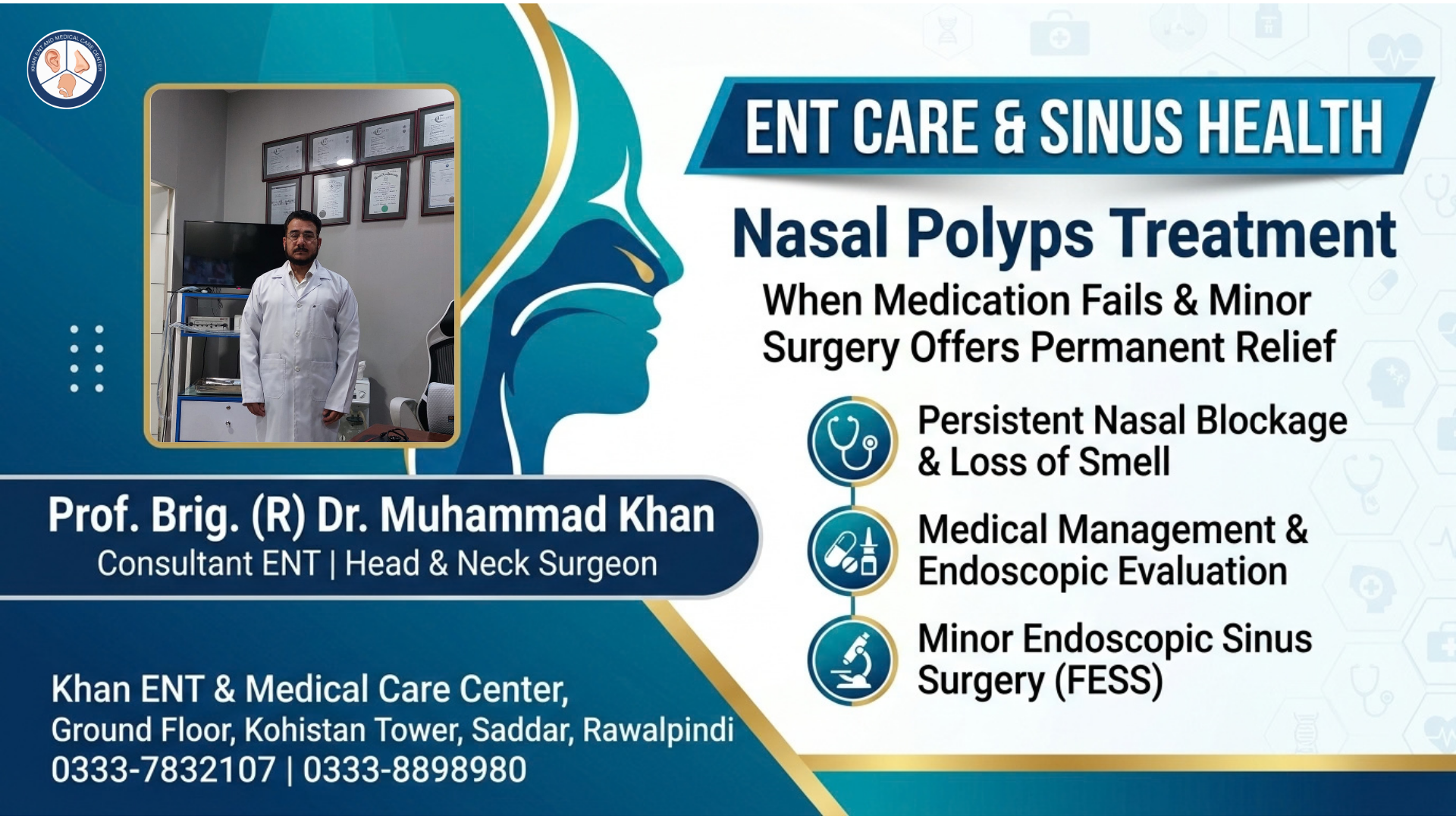
Living with chronic nasal blockage, facial pressure, and a diminished sense of smell can severely impact your daily quality of life. For many patients suffering from persistent sinus trouble, the underlying cause is soft, noncancerous growths inside the nasal passages known as nasal polyps. Effective nasal polyps treatment focuses on reducing mucosal inflammation, restoring airflow, and clearing blocked sinus drainage pathways.
While mild cases often respond well to prescribed sprays and oral medications, severe or recurrent polyps may persist despite conservative medical care. Understanding when conservative nasal polyps treatment is sufficient and when minor endoscopic surgery becomes necessary helps patients make informed choices for long-term sinus relief.
What Are Nasal Polyps?
Nasal polyps are soft, painless, sac-like growths that develop on the lining of the nasal passages or paranasal sinuses. They typically result from chronic inflammation associated with asthma, recurrent sinus infections, allergies, or immune system disorders. Unlike cancerous growths, nasal polyps are noncancerous (benign) and tear-drop shaped.
| Feature | Nasal Polyps | Normal Nasal Mucosa |
| Appearance | Semi-translucent, grape-like growths | Smooth, pink mucosal tissue |
| Pain Sensitivity | Painless to touch (lacks nerve endings) | Sensitive to touch and temperature |
| Location | Nasal cavity, ethmoid & maxillary sinuses | Lining covering nasal turbinates & septum |
| Primary Effect | Airway obstruction & drainage blockage | Humidifies & filters incoming air |
When small, polyps may cause few to no symptoms. However, as they expand in size or grow in clusters, they obstruct nasal passages, disrupt normal mucus drainage, and lead to chronic sinus congestion. Seeking a comprehensive evaluation for nasal polyps treatment ensures an accurate diagnosis early before complications develop.
Recognized Symptoms of Nasal Polyps
Recognizing symptoms early allows a nose specialist doctor to recommend appropriate nasal polyps treatment options before airways become completely blocked.
Chronic Nasal Congestion
Persistent nasal blockage that affects both nostrils is the most common symptom of nasal polyps. Patients often feel as though they have a permanent cold that never clears up, making mouth breathing necessary especially during sleep.
Loss of Smell (Anosmia) and Taste
As polyps enlarge in the upper nasal cavity, they physically block odor molecules from reaching the olfactory nerves. This reduced or complete loss of smell directly impairs the sense of taste, making food unappealing.
Chronic loss of smell combined with persistent dual-sided nasal blockage is a hallmark sign that requires diagnostic video nasal endoscopy to plan appropriate nasal polyps treatment.
Facial Pressure and Post-Nasal Drip
Blocked sinuses lead to accumulated fluid and secondary bacterial infections. Patients frequently report persistent heaviness around the forehead, eyes, and cheeks, along with mucus dripping down the back of the throat (post-nasal drip).
Snoring and Sleep Disturbance
Nighttime airway obstruction caused by large polyps forces patients to sleep with open mouths, leading to dry throat, loud snoring, and restless sleep patterns.
Why Medical Nasal Polyps Treatment Sometimes Fails
Initial management for sinus inflammation relies on pharmaceutical interventions. An effective medical nasal polyps treatment plan typically includes:
- Corticosteroid Nasal Sprays: Formulations like fluticasone, mometasone, or budesonide help reduce mucosal swelling and shrink small polyps.
- Oral Corticosteroids: Short courses of oral steroids (such as prednisone) reduce severe inflammation quickly, providing temporary symptom relief.
- Saline Nasal Irrigation: Daily dousing with sterile saline washes away irritants, thins thick mucus, and supports mucosal healing.
- Allergy Management: Antihistamines and allergen avoidance help control allergic rhinitis flare-ups that fuel polyp growth.
Despite strict adherence to prescribed medications, conservative nasal polyps treatment does not always yield permanent results.
Medications may fail when:
- Large Polyp Size: Large, mature polyps have fibrous tissue that cannot be significantly shrunk by sprays alone.
- Complete Anatomical Blockage: Spray droplets cannot reach deep sinus spaces when passages are completely obstructed.
- Co-existing Anatomical Defects: Conditions like a severe deviated nasal septum (DNS) restrict access and limit airflow independently of inflammation.
- Steroid Side Effect Limits: Oral steroids cannot be used long-term due to risks like elevated blood sugar, weight gain, and bone density reduction.
When Is Surgical Nasal Polyps Treatment Needed?
When non-surgical nasal polyps treatment fails to restore breathing or resolve sinus infections, minor surgical intervention is recommended.
An experienced nose specialist doctor evaluates candidates for surgery based on specific clinical criteria:
- Complete nasal blockage unresponsive to 4–6 weeks of targeted medical therapy.
- Severe, persistent sinus pressure or recurrent acute bacterial sinusitis.
- Total loss of smell that fails to improve with an oral corticosteroid trial.
- Endoscopic or CT scan evidence of extensive polyp disease occupying multiple sinus cavities.
Advanced Surgical Solution - Functional Endoscopic Sinus Surgery (FESS)
Modern surgical nasal polyps treatment uses minimally invasive techniques that require no external incisions. Functional Endoscopic Sinus Surgery (FESS) is the gold-standard procedure performed entirely through the nostrils.
How FESS Is Performed
- Endoscopic Visualization: The surgeon inserts a rigid, high-definition camera (endoscope) into the nostrils to view the sinus passages with precision.
- Precision Removal: Specialized micro-instruments and microdebriders carefully remove polyp tissue while preserving surrounding healthy mucosa.
- Restoring Drainage: The surgeon opens natural sinus ostia (drainage pathways) to allow proper ventilation and fluid outflow.
- No External Scars: Because everything is done internally, there are no visible facial marks, bruises, or external cuts.
| Surgical Phase | What to Expect |
| Procedure Type | Day-care or short hospital stay under general/local anesthesia |
| Duration | 45 to 90 minutes depending on polyp extent |
| Recovery Time | 5 to 7 days for initial light activities |
| Post-Operative Care | Saline rinses & prescribed topical sprays to prevent recurrence |
Post-Surgical Care and Preventing Recurrence
Surgery removes existing polyps and opens blocked pathways, but ongoing management is essential to keep inflammation under control.
Long-term maintenance following surgical nasal polyps treatment includes:
- Regular Saline Rinses: Rinsing twice daily keeps surgical sites clean and prevents crust formation during early healing.
- Continued Topical Steroid Sprays: Using prescribed sprays post-surgery ensures medicine reaches deep sinus cavities to prevent new polyps from forming.
- Follow-Up Endoscopies: Routine in-clinic video nasal endoscopy lets your ENT surgeon check healing progress and address early mucosal swelling promptly.
Specialized Nasal Polyps Treatment in Rawalpindi
For patients seeking expert consultation in Rawalpindi, Islamabad, and nearby regions, getting an accurate diagnosis is the first step toward lasting sinus relief. Rather than relying indefinitely on temporary decongestants or repeating steroid courses, a specialized evaluation determines whether medical management or endoscopic nasal polyps treatment is best suited for your condition.
At Khan ENT & Medical Care Center located in Saddar, Rawalpindi, patients receive diagnostic video nasal endoscopy, personalized medical management, and advanced surgical solutions for complex nasal and sinus disorders led by senior ENT surgeons.
Nasal polyps are a manageable medical condition. While initial medical therapies help shrink small polyps and relieve mild symptoms, persistent obstruction or complete loss of smell indicates the need for specialized intervention. Modern nasal polyps treatment using Functional Endoscopic Sinus Surgery (FESS) provides a safe, scar-free, and effective way to restore nasal breathing and improve sinus health.
If chronic nasal blockage is affecting your sleep, energy, or quality of life, consulting a nose specialist doctor ensures an accurate diagnosis and a targeted plan for permanent relief.
Consultation & Contact Details
Prof. Brig. (R) Dr. Muhammad Khan
Consultant ENT | Head & Neck Surgeon
30+ Years of Senior Military & Civilian Surgical Expertise
Khan ENT & Medical Care Center
Ground Floor, Kohistan Tower, Mahfooz Road, Opposite AFIC, Saddar, Rawalpindi
Phone / WhatsApp: 0333-7832107 | 0333-8898980 | 051-6129940