
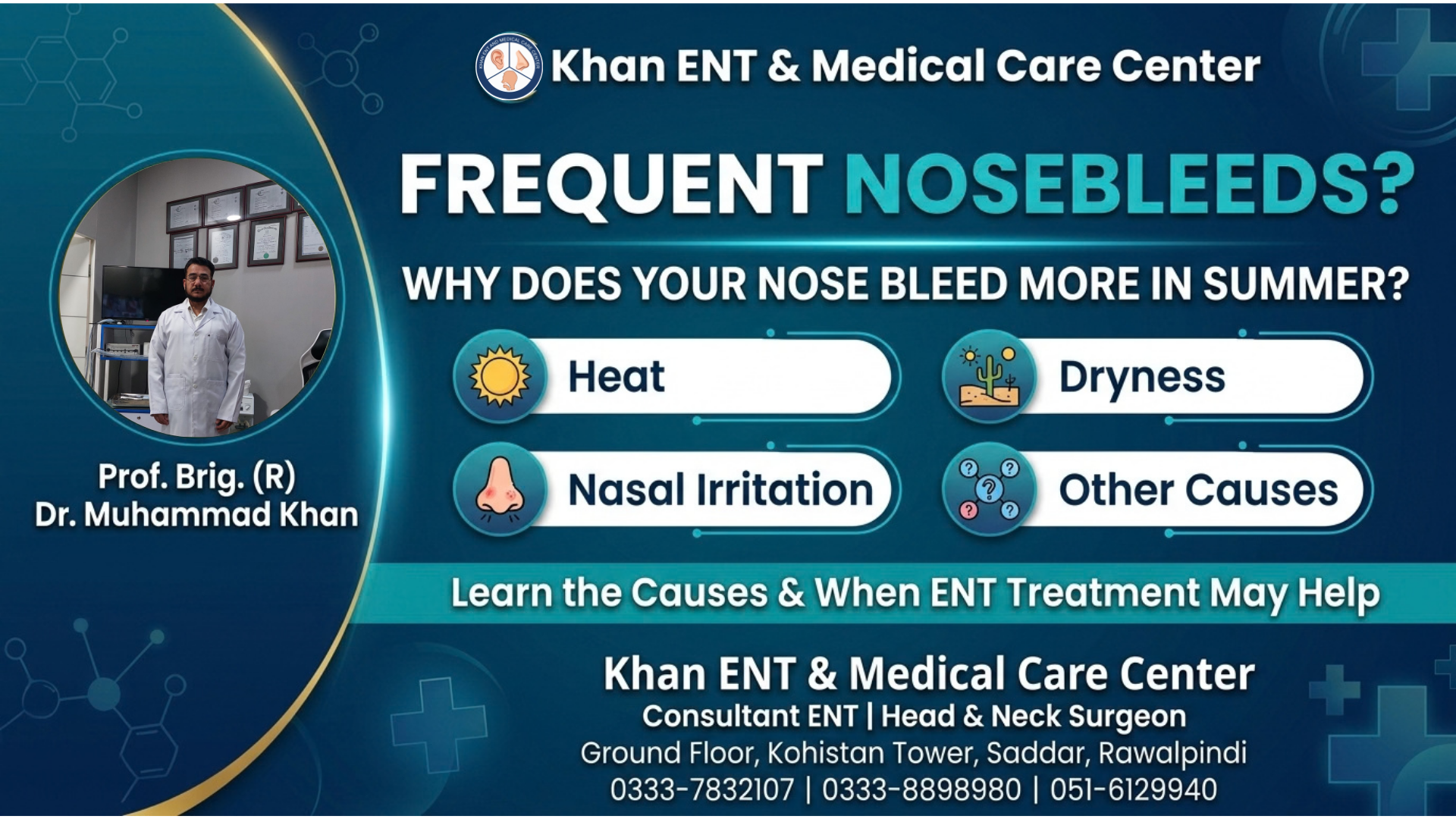
A nosebleed can be alarming, but experiencing frequent nosebleeds requires proper medical attention. When a patient suffers from frequent nosebleeds, localized dryness, inflammation, allergies, or structural nasal issues are usually responsible.
The internal lining of the nose contains a dense network of delicate, tiny blood vessels situated close to the surface. When this mucosa becomes dry or inflamed, blood vessels rupture easily. Environmental factors, nasal trauma, sinus conditions, and blood thinners also contribute to epistaxis.
| Common Triggers for Nasal Bleeding | Key Contributing Factors |
| Local / Environmental Factors | Dry summer air, air conditioning, dust, and heat exposure |
| Inflammatory Triggers | Allergic rhinitis, persistent sneezing, chronic sinusitis |
| Structural & Physical Causes | Deviated Nasal Septum (DNS), nose picking, aggressive blowing |
| Medication & Systemic Factors | Blood thinners (aspirin/anticoagulants), vascular sensitivity |
Summer weather presents unique challenges. Outdoor heat and indoor air-conditioning drastically lower ambient humidity, drying out nasal secretions and creating crusts. A detailed evaluation by an ENT specialist is essential to determine the root cause and rule out chronic nasal conditions.
Why Do Frequent Nosebleeds Happen?
Understanding the precise trigger is the first step toward effective management and long-term relief.
Dry or Irritated Nasal Lining
To function properly, the nasal mucosa requires a balanced layer of moisture. Low humidity damages the nasal lining, directly causing frequent nosebleeds. Prolonged exposure to air-conditioned environments dries out the front portion of the septum (Kiesselbach's plexus), where most bleeding originates.
Nose Picking and Physical Trauma
The lower anterior septum contains delicate blood vessels beneath a thin mucosal layer. Repeatedly scratching the septum triggers frequent nosebleeds, particularly in children. Forceful nose blowing during colds or allergy flare-ups also causes mucosal tears.
Allergies and Nasal Inflammation
Seasonal allergic rhinitis causes persistent sneezing, itching, and congestion. Allergies cause constant nose rubbing, which leads to frequent nosebleeds. Overusing decongestant nasal sprays can also cause mucosal drying and rebound congestion.
Sinus Infections and Respiratory Illnesses
Colds and chronic sinusitis inflame the nasal lining. Swollen tissues combined with constant clearing create ideal conditions for recurrent vessel breakdown.
Deviated Nasal Septum (DNS)
A deviated nasal septum disrupts normal airflow, creating turbulent air currents that dry out one side of the nasal passage. Patients with a deviated septum frequently experience frequent nosebleeds in one nostril alongside nasal blockage.
Medications and Systemic Conditions
Prescription blood thinners like aspirin or anticoagulants increase the risk of persistent bleeding. If you take blood thinners and develop bleeding episodes, consult your prescribing physician before changing your medication.
Less Common Medical Triggers
While most cases stem from dryness or minor trauma, repeated bleeding may occasionally signal vascular malformations, nasal polyps, or growths. A thorough nasal endoscopic examination ensures accurate diagnosis.
What Should You Do During an Active Episode?
Following proper first-aid steps helps stop frequent nosebleeds safely:
- Sit Upright and Lean Forward: Do not tilt your head back. Leaning forward prevents blood from flowing down your throat into your stomach.
- Apply Firm Pressure: Pinch the soft, fleshy part of your nose firmly using your thumb and index finger.
- Hold for 10 to 15 Minutes: Maintain continuous pressure without releasing your grip.
- Avoid Inserting Objects: Do not stuff cotton or tissues inside your nostrils, as removing them can restart bleeding.
When to See an ENT for Frequent Nosebleeds
While minor episodes can be managed at home, formal medical evaluation is required if:
- You suffer from frequent nosebleeds more than once a week.
- Bleeding consistently comes from the same nostril.
- You experience nasal bleeding along with chronic congestion or facial pain.
- Bleeding occurs while taking blood-thinning medications.
- Episodes are becoming heavier or harder to stop.
How Does an ENT Diagnose and Treat the Condition?
Diagnostic Evaluation
A comprehensive consultation includes a detailed medical history and a clinical examination. ENT specialists often perform video nasal endoscopy using a small camera to inspect deep nasal passages and locate the bleeding source.
Treatment Options
- Moisturizing Care: Saline sprays and nasal ointments relieve mild dryness.
- Nasal Cauterization: Nasal cauterization is an effective procedure used to treat frequent nosebleeds by sealing fragile blood vessels under local anesthesia.
- Nasal Packing: Expandable sponges apply direct pressure during acute, heavy bleeding.
- Surgical Correction: Septoplasty or sinus surgery corrects structural defects like a deviated septum.
| Condition | Recommended ENT Treatment Option |
| Dryness / Irritation | Saline sprays, moisturizing nasal ointments, humidification |
| Exposed Fragile Vessel | In-office nasal cauterization (Silver Nitrate) |
| Severe Active Bleeding | Sterile anterior or posterior nasal packing |
| Deviated Septum (DNS) | Septoplasty surgical realignment |
Frequently Asked Questions (FAQs)
Q1: Why does nasal bleeding happen more in summer?
Summer heat and air conditioning lower humidity, drying out the nasal lining and causing blood vessels to crack and bleed easily.
Q2: Is nasal cauterization painful?
No. Cauterization is performed under local anesthesia in an ENT clinic. It takes only a few minutes and is generally painless.
Q3: Should I tilt my head back during a nosebleed?
No. Tilting your head back can cause blood to drain into your stomach, causing nausea. Always lean forward and pinch your nose.
Q4: Can high blood pressure cause nosebleeds?
High blood pressure does not directly cause nosebleeds, but it can make bleeding heavier and harder to stop once it starts.
Q5: When is a nosebleed considered an emergency?
Seek emergency care if bleeding lasts longer than 20 to 30 minutes despite holding pressure, or if it causes dizziness or fainting.
Prevention Tips
Keeping your nose moisturized helps prevent frequent nosebleeds in summer:
- Apply saline nasal sprays or moisturizing gel daily.
- Avoid picking, scratching, or rubbing your nose.
- Blow your nose gently using soft tissues.
- Drink plenty of water to stay hydrated.
- Use a cool-mist humidifier in air-conditioned rooms.
Expert Care for Frequent Nosebleeds in Rawalpindi
For patients seeking treatment in Rawalpindi, Islamabad, and nearby areas, obtaining an accurate diagnosis is key. Rather than temporary fixes, an expert evaluation identifies whether dryness, allergies, or septal defects are responsible.
At Khan ENT & Medical Care Center in Saddar, Rawalpindi, experienced specialists provide comprehensive diagnostic evaluations and advanced care.
While heat and dry air contribute, frequent nosebleeds should be evaluated by a specialist. If your symptoms recur regularly or fail to improve with home care, consulting an ENT surgeon ensures an accurate diagnosis and lasting treatment.
Consultation & Contact Details
Prof. Brig. (R) Dr. Muhammad Khan
Consultant ENT | Head & Neck Surgeon
30+ Years of Senior Military & Civilian Surgical Expertise
Khan ENT & Medical Care Center
Ground Floor, Kohistan Tower, Mahfooz Road, Opposite AFIC, Saddar, Rawalpindi
Phone / WhatsApp: 0333-7832107 | 0333-8898980 | 051-6129940