
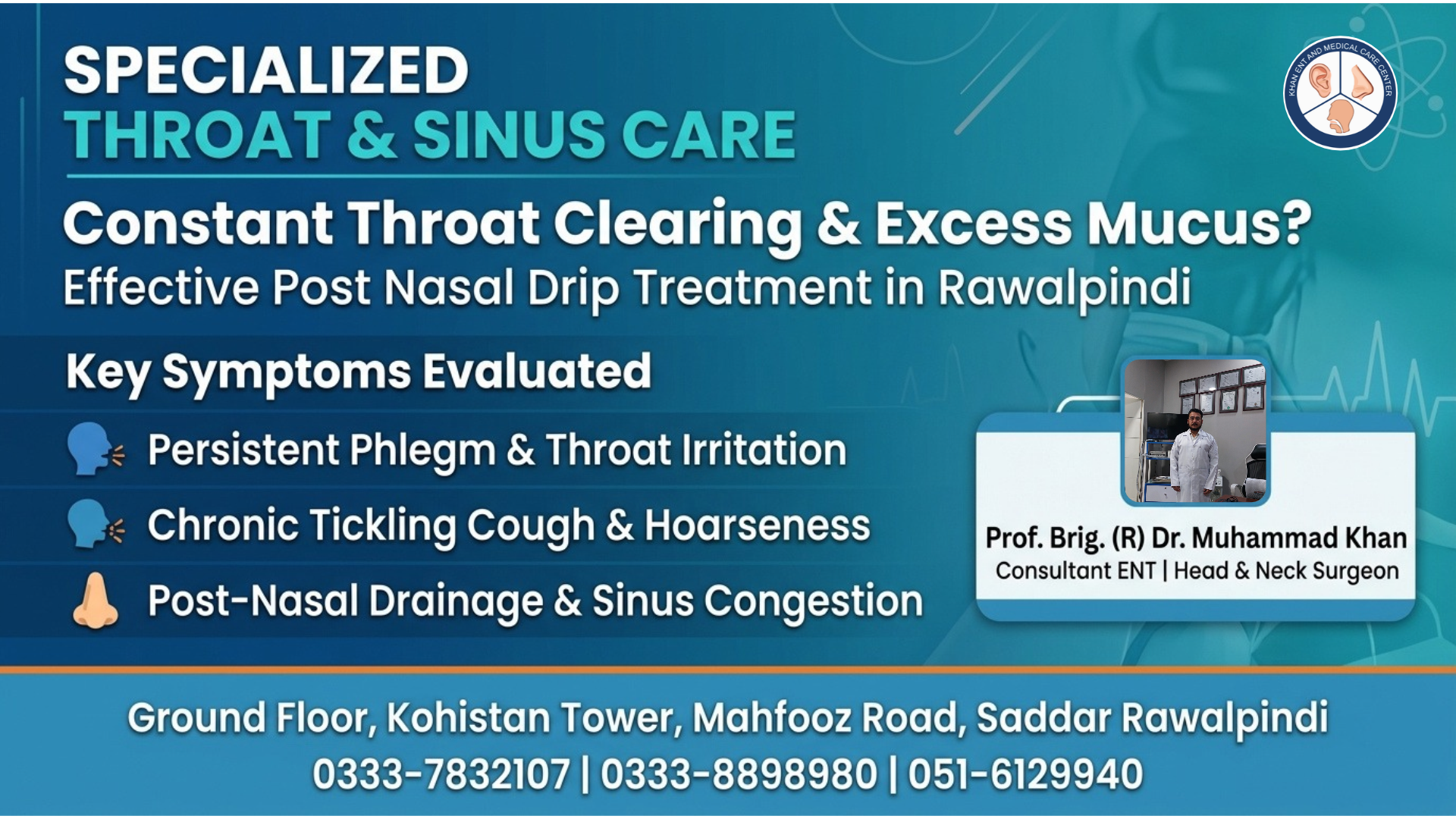
A persistent tickle in the back of your throat, constant swallowing, chronic coughing, and a sensation of excess mucus buildup are classic signs of post-nasal drip. This uncomfortable condition occurs when the nasal glands produce excess mucus that continually trickles down the back of the throat. Seeking specialized post nasal drip treatment in Rawalpindi allows patients to identify the underlying physiological causes of throat drainage and obtain long-lasting relief.
While post-nasal drip is extremely common, it is a symptom of an underlying issue rather than a standalone disease. Environmental pollution, seasonal allergens, chronic sinusitis, and anatomical variations can all trigger excessive nasal secretions. Obtaining an accurate diagnostic evaluation for post nasal drip treatment in Rawalpindi ensures that treatment targets the exact root cause rather than merely masking symptoms with over-the-counter suppressants.
Understanding Post-Nasal Drip and Upper Airway Irritation
Under healthy conditions, the glands lining your nose and sinuses produce about one to two quarts of thin, unnoticed mucus daily to moisten nasal passages and trap inhaled debris. However, when inflammation alters the volume or consistency of this fluid, mucus becomes thick or excessive.
| Clinical Aspects of Post-Nasal Drip | Normal Nasal Secretion | Pathological Post-Nasal Drip |
| Mucus Consistency | Thin, clear, and unnoticeable | Thick, sticky, or copiously watery |
| Throat Sensation | Smooth, lubricated swallowing | Constant lump sensation (globus) & tickling |
| Airway Impact | Unobstructed breathing | Frequent throat clearing & nighttime coughing |
| Secondary Effects | None | Hoarseness, halitosis, & throat soreness |
Consulting an experienced specialist for post nasal drip treatment in Rawalpindi helps restore normal mucosal clearance and prevents persistent throat irritation.
Primary Root Causes of Chronic Nasal Drainage
Effectively resolving chronic throat mucus requires determining why the nasal mucosa is overproducing fluid.
Common triggers evaluated during post nasal drip treatment in Rawalpindi include:
Allergic Rhinitis (Seasonal & Perennial)
Inhaled allergens such as dust mites, pollen, mold, and pet dander trigger histamine release, leading to copious, watery nasal secretions that drain into the pharynx.
Non-Allergic & Vasomotor Rhinitis
Changes in temperature, weather fluctuations, spicy foods, or atmospheric dust can cause overactive nasal nerves to trigger heavy secretions without an allergic reaction.
Constant throat clearing and chronic mucus accumulation in the pharynx are classic warning signs that your upper airway mucosa requires specialized clinical evaluation.
Chronic Sinusitis & Nasal Polyps
Persistent sinus inflammation or mucosal polyps impair normal mucociliary clearance, trapping infected or thickened mucus that slowly drips into the upper throat.
Laryngopharyngeal Reflux (LPR / Silent Reflux)
Stomach acid and digestive enzymes traveling up into the throat irritate delicate pharyngeal tissues, causing the body to produce extra protective mucus as a defense mechanism. Getting a comprehensive assessment for post nasal drip treatment in Rawalpindi helps differentiate between sinus-driven drainage and reflux-induced throat mucus.
Modern Diagnostic Approaches in Otolaryngology
A thorough clinical evaluation is vital before starting any therapeutic regimen.
When evaluating candidates for post nasal drip treatment in Rawalpindi, advanced diagnostic steps include:
- High-Definition Video Nasal Endoscopy: A flexible, thin camera inspects internal nasal passages, turbinates, sinus ostia, and the posterior nasopharynx to identify inflammation or polyps.
- Reflux & Laryngeal Examination: Visualizes the vocal cords and hypopharynx to check for acid-induced swelling or posterior laryngitis.
- CT Imaging of Paranasal Sinuses: Identifies deep sinus mucosal thickening or structural blockages when chronic sinusitis is suspected.
Undergoing precise diagnostic testing ensures that your post nasal drip treatment in Rawalpindi addresses the exact cause of mucus hypersecretion.
Best 5 Post Nasal Drip Treatment in Rawalpindi Options
Depending on whether drainage is caused by allergies, sinus disease, structural issues, or digestive reflux, treatment strategies combine targeted medications with lifestyle management:
Option 1: Targeted Nasal Corticosteroid & Antihistamine Sprays
Prescription intranasal corticosteroid sprays reduce mucosal inflammation, decrease mucus volume, and restore normal drainage pathways. Combining these with non-sedating antihistamines provides effective medical post nasal drip treatment in Rawalpindi for allergen-induced cases.
Option 2: Hypertonic Nasal Saline Irrigations
Regular saline flushes thin out thick, stubborn mucus, remove accumulated environmental irritants, and soothe irritated mucosal membranes without any systemic side effects.
Option 3: Anticholinergic Nasal Sprays (Ipratropium Bromide)
For non-allergic or vasomotor rhinitis characterized by watery post-nasal drainage, anticholinergic sprays block local nerve signals that stimulate excessive fluid secretion, delivering specialized post nasal drip treatment in Rawalpindi.
| Treatment Modality | Targeted Underlying Cause | Expected Clinical Outcome |
| Intranasal Steroids | Allergic & inflammatory rhinitis | Reduced mucosal swelling & secretion |
| Saline Flushes | Mucus stasis & debris accumulation | Mechanical clearance & mucosal hydration |
| Reflux Management | Laryngopharyngeal reflux (LPR) | Reduced pharyngeal irritation & mucus buildup |
Option 4: Laryngopharyngeal Reflux (LPR) Management Regimen
When throat mucus is triggered by silent acid reflux, combining proton pump inhibitors (PPIs) or H2 blockers with dietary modifications halts acid irritation, halting the throat's protective overproduction of mucus.
Option 5: Endoscopic Sinus Surgery (FESS) & Turbinate Reduction
In cases refractory to medical therapy where nasal polyps, severe septal deviation, or chronic sinus blockages prevent normal mucus flow minimally invasive endoscopic surgery restores physiological sinus ventilation. Selecting surgical post nasal drip treatment in Rawalpindi eliminates structural blockages permanently.
Long-Term Health Benefits of Eliminating Post-Nasal Drip
Securing timely post nasal drip treatment in Rawalpindi yields significant improvements in upper respiratory health:
- Relief from Chronic Throat Clearing: Stops constant throat irritation, hawking, and secondary vocal cord strain.
- Elimination of Tickling Cough: Prevents nighttime coughing fits caused by fluid pooling in the hypopharynx.
- Improved Voice Quality: Resolves hoarseness and vocal fatigue caused by constant pharyngeal clearing.Restored Sleep & Fresh
- Breath: Reduces nighttime throat dryness, snoring, and halitosis associated with stagnant mucus.
Patients who follow a structured plan for post nasal drip treatment in Rawalpindi regain daily comfort and clear vocal quality.
Frequently Asked Questions (FAQs)
What is post-nasal drip and why does it occur?
Post-nasal drip occurs when excess or thickened mucus produced by the nasal passages drains down the throat, causing chronic irritation and throat clearing.
Can allergies cause post-nasal drip?
Yes. Allergies to dust, pollen, or pet dander trigger inflammatory responses that increase mucus production and cause watery or sticky drainage.
Why does post-nasal drip feel worse at night or in the morning?
When lying flat, gravity causes mucus to pool in the back of your throat instead of draining naturally, leading to morning throat irritation and coughing.
Can acid reflux cause post-nasal drip symptoms?
Yes. Laryngopharyngeal reflux (LPR) allows stomach enzymes to irritate the throat, prompting your mucosa to create thick protective phlegm.
How does an ENT specialist diagnose the cause of post-nasal drip?
An ENT specialist uses video nasal endoscopy to inspect the nasal cavity, sinus openings, and throat for inflammation, polyps, or anatomical blockages.
Are over-the-counter decongestant sprays safe for long-term post-nasal drip?
No. Using decongestant sprays for more than 3 to 5 days can cause rebound congestion (rhinitis medicamentosa), making nasal drainage worse.
How does saline nasal rinse help with post-nasal drip?
Saline rinses physically flush away excess mucus, crusts, and allergens, keeping nasal membranes moist and improving natural mucus clearance.
Will drinking more water help clear post-nasal drip?
Yes. Adequate hydration thins nasal secretions, making mucus easier to swallow or clear naturally without harsh throat clearing.
When should I seek medical post nasal drip treatment in Rawalpindi?
You should consult a specialist if your throat clearing lasts more than two weeks, or if accompanied by hoarseness, facial pain, or difficulty swallowing.
Where can I get specialized post nasal drip treatment in Rawalpindi?
Prof. Brig. (R) Dr. Muhammad Khan offers comprehensive endoscopic evaluations and targeted medical and surgical care at Khan ENT & Medical Care Center in Saddar, Rawalpindi.
Living with constant throat irritation, excessive phlegm, and persistent coughing is disruptive. By seeking expert post nasal drip treatment in Rawalpindi, you can identify whether allergies, sinus infection, structural issues, or acid reflux are causing your symptoms and receive a targeted treatment plan.
If persistent throat clearing is affecting your comfort, scheduling an evaluation for post nasal drip treatment in Rawalpindi is the most effective path toward clear, easy breathing.
Consultation & Contact Details
Prof. Brig. (R) Dr. Muhammad Khan
Consultant ENT | Head & Neck Surgeon
30+ Years of Senior Military & Civilian Surgical Expertise
Khan ENT & Medical Care Center
Ground Floor, Kohistan Tower, Mahfooz Road, Opposite AFIC, Saddar, Rawalpindi
0333-7832107 | 0333-8898980 | 051-6129940