
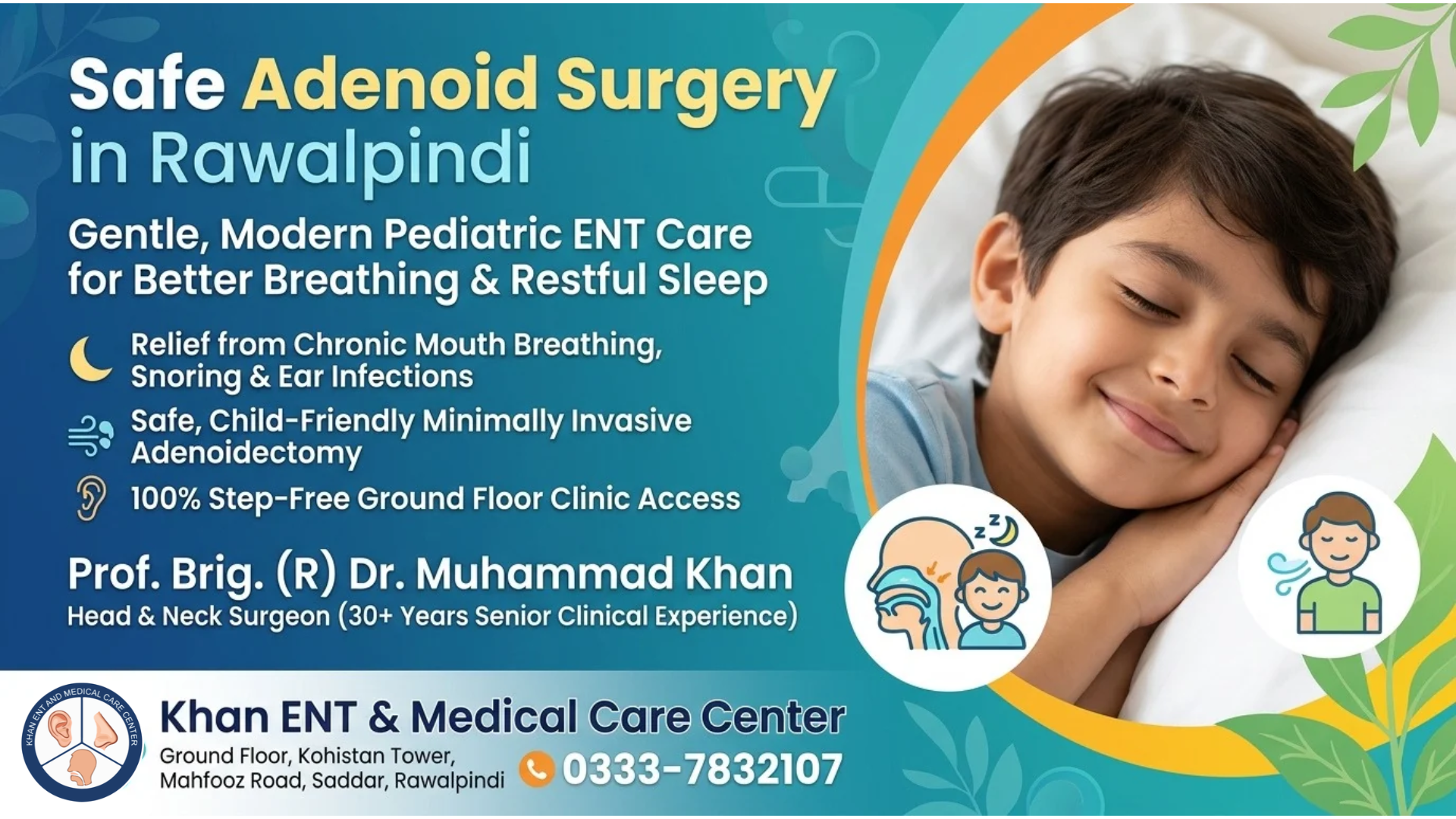
Watching a child struggle with constant mouth breathing, loud nighttime snoring, restless sleep, or recurrent ear infections can be deeply stressful for any parent. While mild nasal congestion is common during childhood, persistent airway blockage is frequently caused by enlarged adenoids—a small pad of lymphatic tissue located high behind the nose where the nasal passages meet the throat. When conservative medications fail to relieve severe obstruction, pediatricians and families often begin researching adenoid surgery in rawalpindi to restore healthy breathing and restful sleep.
At Khan ENT & Medical Care Center, located on the ground floor of Kohistan Tower in Saddar, Rawalpindi, Prof. Brig. (R) Dr. Muhammad Khan works closely with parents to provide clear, ethical, and evidence-based pediatric ear, nose, and throat evaluations. Before recommending adenoid surgery in rawalpindi, every child undergoes a thorough, child-friendly clinical assessment to confirm whether medical management or surgical removal (adenoidectomy) is the safest and most effective path forward. Below, we answer the four most important questions parents ask when considering adenoid surgery in rawalpindi.
When Does a Child Actually Need Adenoid Surgery?
One of the first questions parents ask at Khan ENT & Medical Care Center is whether enlarged adenoids will simply shrink on their own as the child grows. While adenoid tissue naturally reaches its largest size between ages 3 and 7 and gradually shrinks during adolescence, waiting out severe symptoms can negatively impact a child’s sleep quality, hearing, facial growth, and daytime concentration. Consulting a senior ENT specialist for adenoid surgery in rawalpindi becomes necessary when conservative nasal sprays and allergy treatments no longer control the blockage.
An experienced ENT surgeon evaluates several clear clinical signs before recommending adenoid surgery in rawalpindi:
- Chronic Mouth Breathing & Blocked Nose: The child breathes predominantly through an open mouth both day and night, often accompanied by a persistent nasal speech quality (hyponasal voice) and dry, cracked lips.
- Loud Snoring & Pediatric Sleep Apnea: Enlarged adenoids obstruct the upper airway during sleep, leading to heavy snoring, gasping, pauses in breathing, restless tossing, or bedwetting caused by fragmented sleep.
- Recurrent Middle Ear Infections & Fluid Buildup (Glue Ear): Because the adenoids sit directly next to the openings of the Eustachian tubes, swollen adenoid tissue blocks ear drainage. This leads to repeated ear infections or chronic fluid behind the eardrum (otitis media with effusion), which can cause temporary hearing loss and speech delays.
- Persistent Pediatric Sinusitis: Chronic, thick nasal discharge and recurrent sinus infections that repeatedly return after antibiotic courses.
At Khan ENT & Medical Care Center, Prof. Brig. (R) Dr. Muhammad Khan prioritizes non-surgical medical therapy first for mild or allergy-driven inflammation. However, when objective examination confirms significant airway obstruction or ear fluid risk, timely adenoid surgery in rawalpindi prevents long-term complications and dramatically improves a child’s daily energy and development.
How Safe Is Adenoidectomy, and How Is the Procedure Performed?
It is completely natural for parents to feel anxious whenever general anesthesia and surgery are mentioned for a young child. Understanding modern surgical standards helps ease that worry. Today, adenoid surgery in rawalpindi is a well-established, brief, and minimally invasive outpatient or short-stay procedure performed under safe pediatric general anesthesia.
During an adenoidectomy, there are no external cuts or visible scars on the child’s face or neck. The surgeon accesses the adenoids gently through the child’s open mouth using specialized pediatric instruments and modern endoscopic or coblation-assisted visualization techniques. Complete visualization ensures that obstructive adenoid tissue is cleanly and safely removed while protecting surrounding nasal and throat structures.
Key safety highlights of modern adenoid surgery in rawalpindi include:
- Short Operating Time: The procedure itself typically takes only 20 to 30 minutes, minimizing anesthesia exposure.
- Dedicated Pediatric Anesthesia Monitoring: Experienced anesthesiologists continuously monitor the child’s breathing, oxygen levels, and heart rate throughout the procedure and recovery room stay.
- Same-Day Discharge in Most Cases: After a few hours of post-anesthesia observation to ensure the child is awake, comfortable, and drinking fluids well, most children return home the very same day.
- Combined Procedures When Indicated: If a child also suffers from severely enlarged, infected tonsils or persistent middle ear fluid, the surgeon can safely perform a tonsillectomy or place tiny ear ventilation tubes (grommets) during the same single anesthesia session.
Choosing an experienced consultant with over 30 years of clinical and surgical background ensures that every precaution is taken before, during, and after adenoid surgery in rawalpindi.
What Does Recovery Look Like After Adenoid Surgery?
Parents are often pleasantly surprised by how quickly children bounce back after adenoid surgery in rawalpindi. Unlike adult throat surgeries, pediatric adenoidectomy involves minimal discomfort, and most children feel noticeably better within a few days.
Here is what parents can typically expect during the recovery timeline following adenoid surgery in rawalpindi:
- Days 1 to 2 (Rest & Hydration): Your child may feel mildly sleepy from anesthesia on the first afternoon and experience a mild sore throat, neck stiffness, or temporary nasal stuffiness due to normal post-surgical swelling. Encouraging frequent sips of cool water, clear juices, milk, or soft foods like yogurt, mashed potatoes, and pudding keeps the throat moist and comfortable.
- Days 3 to 5 (Returning Energy): Most children regain their normal appetite and playful energy within three to four days. Mild bad breath or slight nasal congestion is normal as the surgical area heals naturally.
- Days 7 to 10 (Full Healing & Easier Breathing): By the end of the first week, swelling subsides completely. Parents usually notice quieter nighttime breathing, reduced snoring, and closed-mouth breathing during sleep. Most children return to school within 5 to 7 days, avoiding rough physical play for about two weeks.
At Khan ENT & Medical Care Center, parents receive clear, written post-operative care instructions and scheduled follow-up appointments so you always feel supported throughout your child’s recovery from adenoid surgery in rawalpindi.
Why Do Families Choose Khan ENT & Medical Care Center for Pediatric ENT Care?
When your child requires specialized ear, nose, or throat evaluation, choosing the right medical center makes every visit smoother for both parents and children.
Families across Rawalpindi, Islamabad, and surrounding regions trust Khan ENT & Medical Care Center for several key reasons:
- 30+ Years of Senior Surgical Judgment: Consultations are led by Prof. Brig. (R) Dr. Muhammad Khan, a renowned Consultant ENT and Head & Neck Surgeon who treats every child with patience, precision, and conservative medical ethics.
- Gentle, Child-Friendly Diagnostics: Our clinic uses modern pediatric diagnostic equipment to evaluate nasal passages and ear health calmly and accurately without causing unnecessary distress.
- 100% Step-Free Ground Floor Accessibility: Located at on the Ground Floor of Kohistan Tower, Mahfooz Road, Saddar, Rawalpindi (directly opposite AFIC). Parents pushing baby strollers, carrying young children, or visiting with elderly grandparents can walk straight in from street level with zero stairs.
Whether you are seeking a first evaluation or a trusted second opinion regarding adenoid surgery in rawalpindi, our team provides honest guidance tailored to your child’s exact needs.
Additional Parent Questions About Adenoid Surgery
Can adenoids grow back after adenoid surgery in rawalpindi?
Complete removal using modern visualization techniques makes regrowth very rare. In a small percentage of very young children operated on under age 3, tiny microscopic remnants of lymphoid tissue may occasionally enlarge later, though repeat adenoid surgery in rawalpindi is seldom required.
Will removing my child’s adenoids weaken their immune system?
No. While adenoids are part of the immune system during early infancy, the body has numerous other lymph nodes and immune defenses throughout the throat and body. Clinical studies confirm that children who undergo adenoid surgery in rawalpindi experience fewer respiratory infections, better sleep, and stronger overall health—not weaker immunity.
What pre-operative tests are needed before adenoidectomy?
Before scheduling adenoid surgery in rawalpindi, Prof. Brig. (R) Dr. Muhammad Khan orders basic routine blood tests—including complete blood count and coagulation profile—to confirm your child’s blood clots normally and that they are completely fit for anesthesia.
Schedule Your Child’s Pediatric ENT Consultation Today
Help your child breathe freely, sleep peacefully, and thrive every day. Book a comprehensive pediatric evaluation with Prof. Brig. (R) Dr. Muhammad Khan at Khan ENT & Medical Care Center to discuss whether medical therapy or adenoid surgery in rawalpindi is right for your child.
Consultant Specialist: Prof. Brig. (R) Dr. Muhammad Khan
Consultant ENT | Head & Neck Surgeon (30+ Years Senior Clinical Experience)
Khan ENT & Medical Care Center
Ground Floor, Kohistan Tower, Mahfooz Road, Opposite AFIC, Saddar, Rawalpindi
Appointment Helpline Number: 0333-7832107