
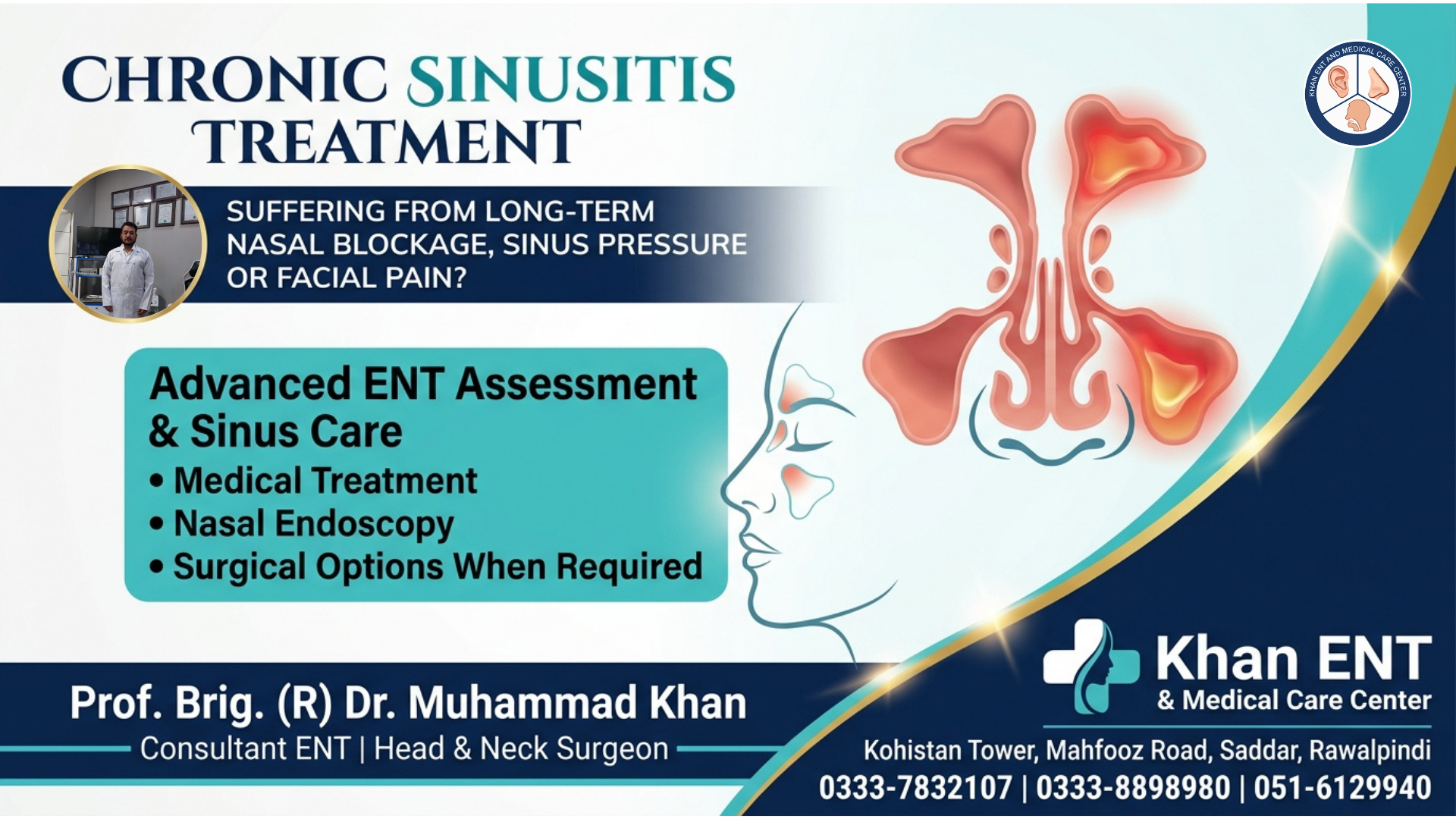
Chronic sinusitis treatment starts with understanding why nasal blockage, facial pressure, drainage, or reduced smell keeps returning. Chronic sinusitis is generally considered when symptoms persist for 12 weeks or longer despite appropriate care. Because long-term symptoms can have several causes, an ENT assessment is important before deciding which treatment is suitable.
What Is Chronic Sinusitis?
Sinusitis occurs when the lining of the nose and sinuses becomes inflamed. Swelling can interfere with normal drainage and ventilation of the sinus passages. In chronic cases, inflammation may continue for months, and symptoms can fluctuate rather than disappearing completely.
Common symptoms include:
- Persistent nasal blockage or congestion
- Thick nasal discharge or postnasal drainage
- Pressure or discomfort around the cheeks, forehead, eyes, or nose
- Reduced sense of smell
- Head or facial pressure
- Cough caused by drainage, particularly at night
- Tiredness or difficulty concentrating
These symptoms do not always mean that a person has chronic sinusitis. Allergies, nasal polyps, a deviated septum, enlarged turbinates, infection, and other nasal conditions can produce similar complaints.
Why Does Sinusitis Become Chronic?
A number of factors may contribute to persistent sinus inflammation. Allergic rhinitis can keep the nasal lining swollen. A deviated nasal septum or enlarged turbinates may narrow the nasal passages and affect airflow. Nasal polyps can also obstruct drainage pathways.
Other factors can include repeated respiratory infections, asthma, exposure to smoke or irritants, and certain anatomical differences in the nose and sinuses. Identifying the contributing factor is an important part of chronic sinusitis treatment because the same approach is not appropriate for every patient, which is why chronic sinusitis treatment should be tailored to the cause.
How Is Chronic Sinusitis Diagnosed?
An ENT specialist usually begins with a detailed history and examination. The doctor may ask how long symptoms have been present, whether they occur continuously or intermittently, whether there is facial pressure or loss of smell, and what treatments have already been tried.
A nasal examination may provide important information about swelling, discharge, septal deviation, polyps, or other structural problems. In selected patients, nasal endoscopy can allow the ENT specialist to examine areas that cannot be seen adequately with a routine examination.
When clinically indicated, imaging such as a CT scan of the sinuses may help evaluate sinus anatomy and the extent of disease. Testing should be guided by symptoms and examination rather than performed routinely for every episode of nasal congestion.
Medical Treatment Options for Chronic Sinusitis Treatment
For many patients, chronic sinusitis treatment begins with medical management. The exact plan depends on the underlying cause and may include measures intended to reduce inflammation, improve nasal drainage, and manage associated conditions.
Saline nasal irrigation may help clear mucus and irritants from the nasal passages when performed correctly with appropriate water safety. An ENT specialist may also recommend an intranasal corticosteroid spray for appropriate patients to reduce nasal inflammation. If allergies contribute to symptoms, allergy management may form part of the overall plan.
Antibiotics are not automatically required for every patient with chronic sinus symptoms. Their use depends on the clinical assessment and whether there is evidence suggesting a bacterial component. Patients should avoid starting or repeatedly using antibiotics without professional advice.
When Is Surgery Considered?
Not every patient with chronic sinusitis needs an operation. Surgery may be considered when symptoms and objective findings remain significant despite appropriate medical management, or when structural blockage or nasal polyps are contributing to the problem.
Endoscopic sinus surgery is one option used in selected cases. The surgeon works through the nasal passages using an endoscope and specialized instruments to improve access and drainage in affected sinus areas. The specific procedure depends on the patient's anatomy and diagnosis.
Septoplasty may be considered when a significantly deviated septum contributes to nasal obstruction. Turbinate procedures or treatment of nasal polyps may also be appropriate in selected patients. Surgery should be individualized rather than chosen simply because symptoms have lasted a long time.
What Can Happen If Persistent Symptoms Are Ignored?
Long-term nasal blockage can affect sleep, exercise, work, and everyday comfort. Reduced smell can also affect enjoyment of food and awareness of certain odors. Ongoing mouth breathing may cause dryness and throat irritation.
Persistent symptoms should not automatically be attributed to sinusitis. If nasal obstruction continues, an ENT examination can help determine whether sinus inflammation, allergy, a deviated septum, polyps, or another condition is responsible.
Simple Measures That May Support Nasal Health
Alongside professional care, several practical habits may help support nasal health:
- Avoid cigarette smoke and unnecessary exposure to strong irritants.
- Keep indoor environments reasonably free from dust where possible.
- Follow prescribed nasal medication correctly and consistently.
- If using saline irrigation, use safe water and clean the device appropriately.
- Stay hydrated according to your general health needs.
- Manage known allergies with advice from a qualified healthcare professional.
- Do not repeatedly use decongestant nasal sprays beyond the recommended period because overuse can worsen congestion.
These measures may support chronic sinusitis treatment, but they do not replace an examination when symptoms are persistent or severe.
When Should You See an ENT Specialist?
Consider an ENT evaluation if nasal blockage, facial pressure, thick drainage, reduced smell, or related symptoms continue for weeks or repeatedly return. An assessment is particularly useful when symptoms interfere with sleep or daily activities, when previous treatments have not provided lasting improvement, or when a structural nasal problem is suspected.
Prompt medical evaluation is also appropriate for severe symptoms, swelling around the eye, vision changes, severe headache, significant fever, or other concerning symptoms.
Chronic Sinusitis Treatment in Saddar, Rawalpindi
Patients looking for chronic sinusitis treatment in Rawalpindi can seek evaluation from an ENT specialist to understand the cause of persistent nasal symptoms. At Khan ENT & Medical Care Center in Saddar, Rawalpindi, assessment may include clinical examination and, when appropriate, nasal endoscopy to help evaluate nasal and sinus problems.
Prof. Brig. (R) Dr. Muhammad Khan is a Consultant ENT and Head & Neck Surgeon providing evaluation and management for a range of ear, nose, and throat conditions. Treatment recommendations are based on the patient's symptoms, examination findings, and clinical needs.
The clinic is located at Kohistan Tower, Mahfooz Road, Saddar, Rawalpindi, making it convenient for patients seeking local ENT care for persistent nasal blockage and sinus-related concerns.
A Practical Takeaway
Chronic sinusitis treatment is not a single procedure or medicine that works for everyone. The most useful approach is to identify why symptoms are continuing and then select treatment according to the underlying cause. Medical management may be enough for some patients, while selected patients with persistent disease or structural problems may benefit from endoscopic or other surgical treatment as part of a carefully selected chronic sinusitis treatment plan.
If you have long-term nasal blockage, facial pressure, drainage, or reduced smell, do not assume that repeated self-treatment is the only option. An ENT evaluation can help clarify the cause and guide an appropriate chronic sinusitis treatment plan.
Consult an ENT Specialist in Saddar, Rawalpindi
Prof. Brig. (R) Dr. Muhammad Khan
Consultant ENT | Head & Neck Surgeon
Khan ENT & Medical Care Center
Kohistan Tower, Mahfooz Road, Saddar, Rawalpindi
0333-7832107 | 0333-8898980 | 051-6129940