
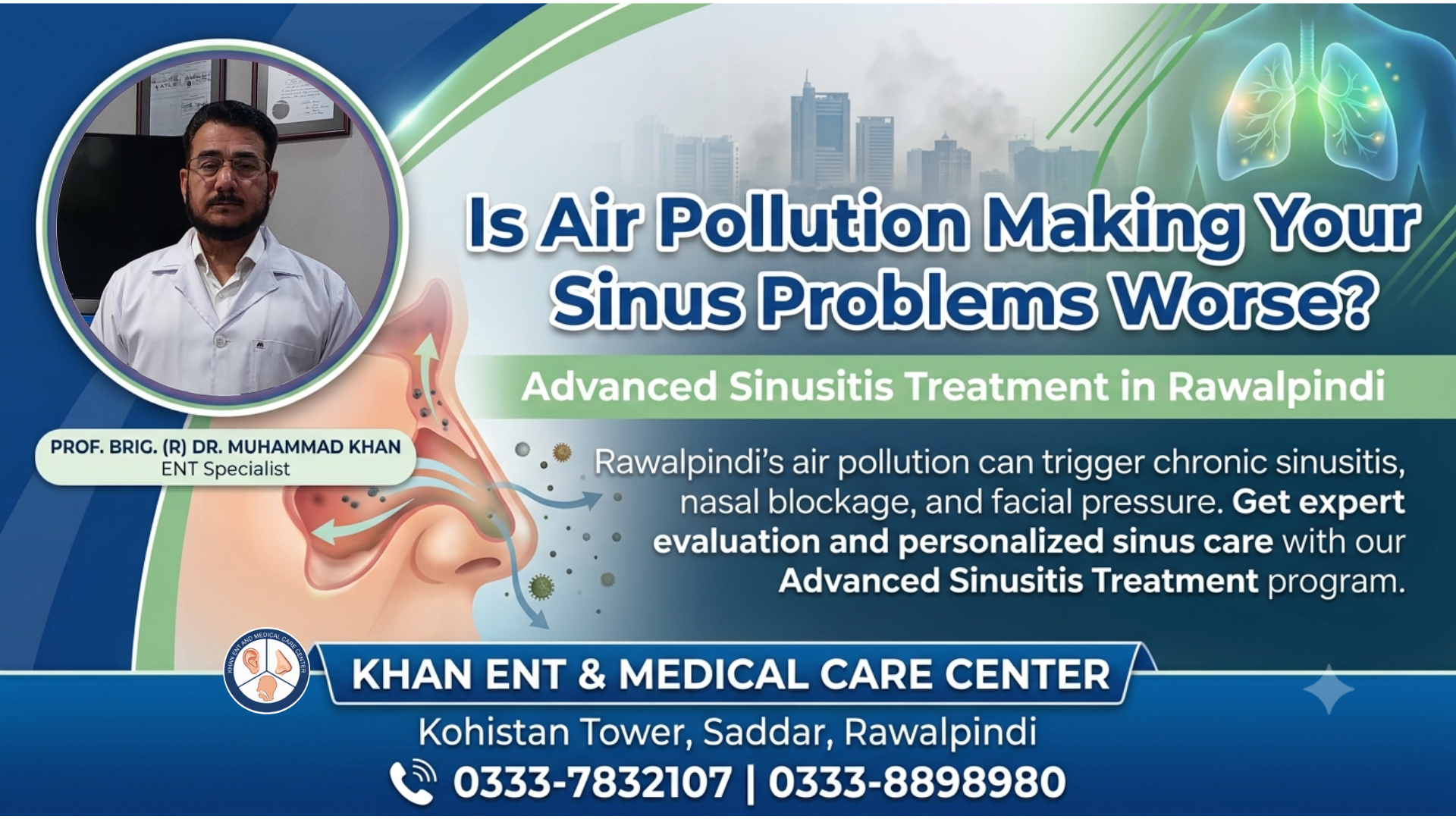
Air pollution has become an important health concern in many cities, including Rawalpindi. Dust, smoke, vehicle emissions, and industrial pollutants can irritate the nose and sinuses every day. As a result, many people now seek Sinusitis Treatment Rawalpindi because they experience constant nasal blockage, facial pressure, headaches, and repeated sinus infections. Understanding how pollution affects sinus health helps people protect their breathing and seek treatment before symptoms become chronic.
How Air Pollution Affects the Sinuses
The nose works as the body's natural air filter. It traps dust, allergens, and harmful particles before they reach the lungs. However, continuous exposure to polluted air can overwhelm this natural defense system. Consequently, the nasal lining becomes swollen and irritated.
When swelling blocks the sinus openings, mucus cannot drain normally. Therefore, pressure develops inside the sinus cavities, causing discomfort around the forehead, cheeks, and eyes. Some people also experience thick nasal discharge, reduced smell, and difficulty breathing through the nose.
Furthermore, pollution often worsens seasonal allergies. When allergies and pollution occur together, inflammation increases and sinus symptoms may become more frequent throughout the year.
Common Symptoms That Need Attention
Many people ignore sinus symptoms because they believe they will improve naturally. However, persistent symptoms should not be overlooked.
Common signs include:
• Constant nasal blockage
• Facial pain or pressure
• Frequent headaches
• Thick nasal discharge
• Reduced sense of smell
• Difficulty breathing through the nose
• Recurrent sinus infections
People experiencing these symptoms for several weeks should consider Sinusitis Treatment Rawalpindi to identify the underlying cause before the condition becomes more severe.
Why Professional Evaluation Is Important
Every blocked nose does not indicate sinusitis. Some patients have nasal allergies, while others may have nasal polyps or a deviated nasal septum. Therefore, a complete ENT assessment is essential.
During evaluation, the ENT specialist reviews symptoms, performs a physical examination, and may recommend nasal endoscopy or imaging when required. This detailed assessment helps determine the exact cause and allows the doctor to recommend the most appropriate treatment for each individual patient.
Modern Sinusitis Treatment Rawalpindi
Effective Sinusitis Treatment Rawalpindi focuses on reducing inflammation, improving sinus drainage, and restoring comfortable breathing. Because every patient has different symptoms, treatment is always planned according to the examination findings and medical history.
Initially, many patients improve with medical treatment and regular follow-up. However, if symptoms continue despite appropriate care, further evaluation may be necessary. In selected cases, advanced Functional Endoscopic Sinus Surgery (FESS) may be recommended to restore normal sinus drainage while preserving healthy tissue.
Moreover, patients should continue preventive measures even after treatment. Staying hydrated, avoiding cigarette smoke, reducing exposure to heavy dust, and following medical advice may help reduce future sinus flare-ups.
When Should You Seek Sinusitis Treatment Rawalpindi?
Early Sinusitis Treatment Rawalpindi may help prevent long-term complications and improve quality of life. People should not wait until symptoms become severe before seeking professional advice.
You should arrange an ENT consultation if you experience:
• Sinus symptoms lasting longer than 12 weeks
• Repeated sinus infections during the year
• Persistent facial pain or pressure
• Difficulty breathing through the nose
• Reduced sense of smell
• Poor response to medicines
Early diagnosis allows treatment to begin sooner and may reduce the risk of chronic sinus disease.
Protecting Your Sinus Health
Daily habits also play an important role in maintaining healthy sinuses. Although pollution cannot always be avoided, simple preventive measures may reduce irritation and support better nasal health.
Helpful steps include drinking enough water, keeping indoor air clean, wearing a mask in dusty environments, avoiding unnecessary smoke exposure, and attending regular follow-up appointments when recommended.
According to the World Health Organization (WHO), reducing exposure to air pollution helps protect respiratory health and lowers the risk of chronic airway conditions.
Air pollution continues to affect nasal and sinus health for many people living in urban areas. Persistent congestion, facial pressure, headaches, and repeated infections should not be ignored because they may indicate underlying sinus disease.
At Khan ENT & Medical Care Center, Prof. Brig. (R) Dr. Muhammad Khan provides comprehensive evaluation and Sinusitis Treatment Rawalpindi using modern diagnostic techniques and patient-centered care. Every treatment plan is tailored according to the patient's symptoms, examination findings, and long-term healthcare needs.
If sinus symptoms continue to affect your daily comfort, early Sinusitis Treatment Rawalpindi may help improve breathing, reduce recurring infections, and support healthier long-term sinus function through timely diagnosis, personalized treatment, and regular follow-up care.