
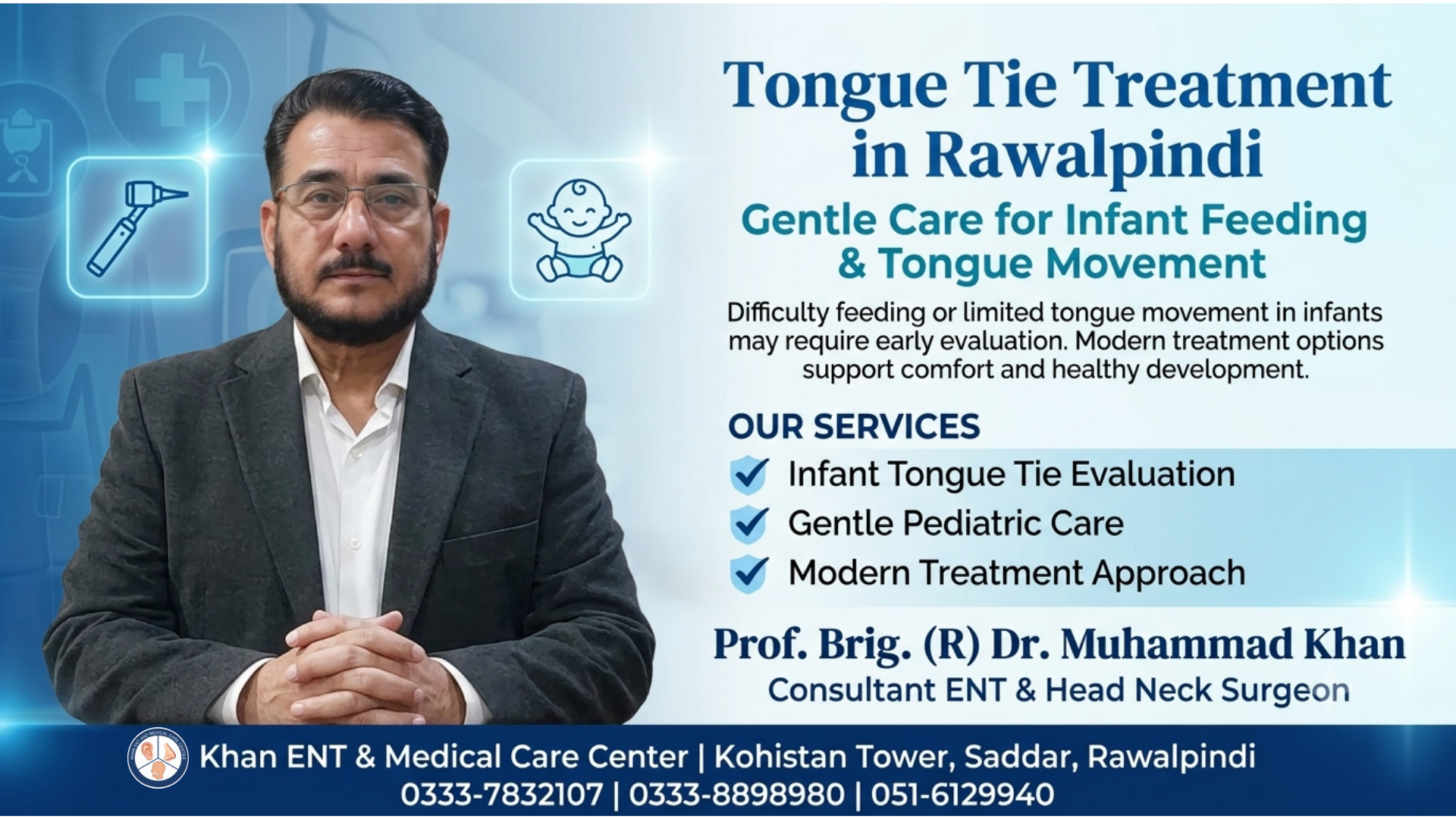
Tongue Tie Treatment in Rawalpindi is a modern treatment option available for infants who may experience feeding difficulties or limited tongue movement due to tongue-tie. Early recognition and timely evaluation may support improved feeding comfort and normal oral function during early development.
Many parents notice that their baby struggles during feeding, has difficulty maintaining latch, or becomes unusually frustrated while feeding. In some cases, these concerns may be related to tongue-tie.
At Khan ENT & Medical Care Center, infants and children receive professional evaluation and treatment planning using a patient-centered approach focused on comfort and appropriate care.
What Is Tongue Tie?
Tongue-tie, also called ankyloglossia, is a condition in which the thin tissue connecting the tongue to the floor of the mouth is shorter, tighter, or positioned differently than expected.
This may reduce tongue mobility and affect feeding in some infants.
Not every child with tongue-tie requires treatment. The decision depends on symptoms, examination findings, and feeding concerns.
Parents commonly seek evaluation when they notice:
- Difficulty during feeding
- Poor latch during breastfeeding
- Feeding frustration
- Clicking sounds during feeding
- Extended feeding sessions
- Limited tongue movement
- Concerns regarding oral function
A detailed clinical assessment helps determine whether tongue-tie may be contributing to these concerns.
What Is Frenulectomy?
Frenulectomy is a procedure performed to release the restrictive tissue beneath the tongue when treatment is considered appropriate.
Modern approaches focus on gentle and efficient care designed to minimize discomfort.
The procedure itself is generally brief, and treatment recommendations depend on individual assessment and clinical findings.
The goals of treatment may include:
- Supporting feeding comfort
- Improving tongue mobility
- Supporting oral function
- Improving feeding efficiency
- Supporting overall infant comfort
Parents receive guidance regarding expectations and follow-up care.
When May Treatment Be Considered?
Every infant develops differently, and not all feeding concerns are caused by tongue-tie.
Professional evaluation may be considered when:
- Feeding remains difficult
- Parents notice repeated feeding struggles
- Weight gain concerns are discussed
- Tongue movement appears restricted
- Feeding sessions become unusually prolonged
Assessment helps identify whether tongue-tie or another factor may be involved.
Benefits of Early Evaluation
Early evaluation allows families to better understand available treatment options and receive guidance appropriate for their child’s needs.
Potential benefits of proper assessment may include:
- Improved feeding comfort
- Better tongue movement
- Support for oral development
- Reduced feeding frustration
- Improved parental confidence
Individual outcomes vary according to each child’s condition.
Recovery and Follow-Up
Recovery experiences vary from infant to infant.
Parents are commonly advised to:
- Follow feeding recommendations
- Attend scheduled follow-up visits
- Observe feeding patterns
- Discuss any concerns with the doctor
Follow-up care supports ongoing evaluation and infant comfort.
Why Parents Should Not Ignore Feeding Concerns
Feeding concerns in infants are common and may occur for different reasons. While tongue-tie may be one possible factor, professional evaluation helps identify the most appropriate next step.
Parents should avoid self-diagnosis and seek medical guidance whenever feeding concerns persist.
Early support may help families feel more confident and informed.
Tongue Tie Treatment in Rawalpindi at Khan ENT
At Khan ENT & Medical Care Center, comprehensive assessment and modern treatment options are available for infants and children experiencing feeding and oral concerns.
Consult:
Prof. Brig. (Retd.) Dr. Muhammad Khan
Consultant ENT | Head & Neck Surgeon
With more than 30 years of clinical experience, Prof. Brig. (R) Dr. Muhammad Khan provides child-focused care supported by modern evaluation techniques.
Tongue Tie Treatment in Rawalpindi offers an advanced option for selected infants experiencing feeding concerns related to tongue mobility.
If feeding difficulties continue or parents notice concerns regarding tongue movement, professional evaluation may help determine the most suitable approach toward improved feeding comfort and child development.