
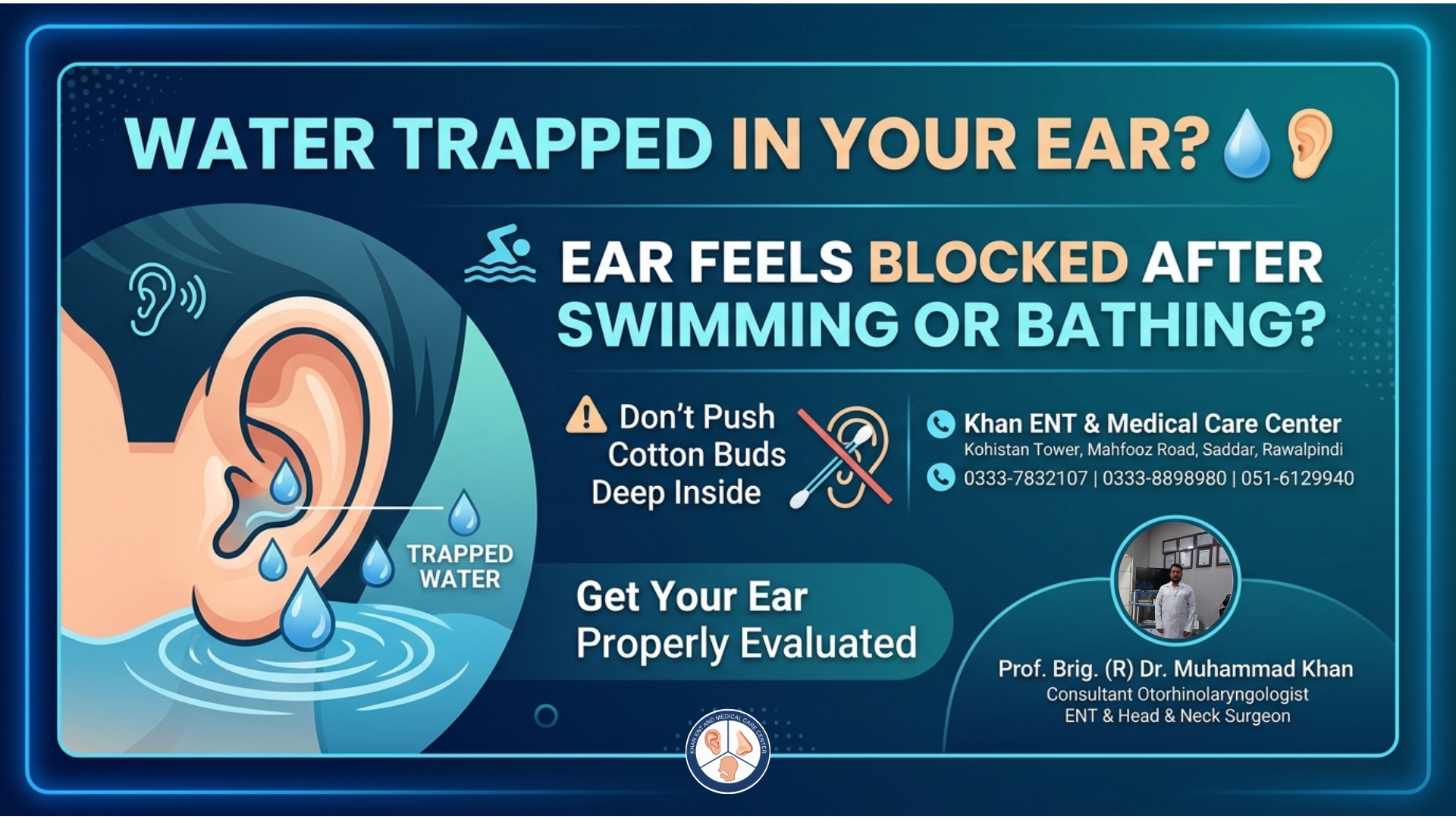
Water in the ear is a common problem after swimming, bathing, showering, or washing your hair. Sometimes the water drains naturally within minutes. In other situations, it may remain in the ear canal and create a plugged, muffled, or uncomfortable sensation.
If you have water trapped in ear, your first reaction may be to reach for a cotton bud or another object. However, putting objects into the ear canal can push moisture and earwax deeper and may irritate or injure the delicate skin.
The good news is that simple precautions can often help. This guide explains what you can safely try, what you should avoid, and when an ENT evaluation may be appropriate.
What Does Water Trapped in Ear Feel Like?
When water remains inside the ear canal, you may notice several sensations.
Common symptoms include:
- A blocked or plugged feeling
- Muffled hearing
- A sensation of fluid moving inside the ear
- Mild discomfort or pressure
- Temporary reduction in hearing
- Increased sensitivity when touching or moving the outer ear
If you have water trapped in ear after swimming or bathing and there is no significant pain, the water may simply need time to drain.
However, persistent symptoms should not automatically be blamed on water. Earwax blockage, inflammation, infection, or other ear conditions can produce similar sensations.
Let Gravity Help
The simplest approach is often to allow gravity to help the water leave the ear.
Tilt your head so the affected ear faces downward. You can gently pull the outer ear backward and upward to straighten the ear canal in an adult, then remain in that position for a short time.
Do not forcefully shake your head or insert anything into the ear.
If you have water trapped in ear, patience may be enough for the moisture to drain naturally.
Gently Dry the Outer Ear
After swimming or bathing, use a clean, soft towel to dry the outside of your ear.
Do not push the towel or any other material deep into the ear canal. The outer ear can be dried safely without disturbing the natural protective environment inside the canal.
A hair dryer may also be used cautiously on a cool or low setting, held well away from the ear. Avoid hot air and excessive heat.
If you repeatedly experience water trapped in ear, drying the outer ear carefully after swimming may help reduce the amount of moisture that remains around the canal opening.
Avoid Cotton Buds
Cotton buds are one of the most common ways people attempt to solve a blocked ear.
The problem is that a cotton bud may push water, wax, or debris farther into the canal rather than removing it. It can also scratch the skin lining the ear canal.
Inserting objects into the ear can cause trauma and, in some cases, damage the eardrum.
Therefore, if you feel water trapped in ear, resist the temptation to insert a cotton bud deeply into the canal.
The ear is generally self-cleaning, and routine deep cleaning is not normally necessary.
Do Not Use Sharp Objects
Pins, hairpins, matchsticks, keys, paper clips, and other objects should never be used to remove moisture or wax from the ear.
The ear canal is a delicate structure. A sudden movement while using an object can cause bleeding, injury, infection, or eardrum damage.
This is especially important when someone has water trapped in ear and assumes that something must be physically removed.
If the blocked sensation persists, the underlying cause should be identified rather than repeatedly trying to clean the ear.
Be Careful With Ear Drops
There are products marketed to help dry the ear after swimming, but they are not suitable for everyone.
You should not assume that any ear drop is safe when there may be an eardrum perforation, previous ear surgery, ear infection, or unexplained discharge.
If you frequently develop water trapped in ear, discuss appropriate prevention with an ENT professional, particularly if you have a history of ear problems.
The correct approach depends on the condition of the ear rather than simply the presence of moisture.
Can Trapped Water Cause an Ear Infection?
Water itself does not necessarily mean that an infection will develop. However, prolonged moisture in the ear canal can contribute to an environment in which bacteria can multiply, particularly when the protective skin barrier has been irritated.
This can contribute to swimmer’s ear, also known as otitis externa.
Symptoms of an outer-ear infection can include:
- Increasing ear pain
- Itching
- Redness or swelling
- Tenderness when touching the outer ear
- Ear discharge
- Worsening hearing because of canal swelling
If you have water trapped in ear followed by increasing pain, discharge, or significant tenderness, you should arrange an appropriate medical assessment.
When Is Muffled Hearing Not Just Water?
A temporary blocked sensation after swimming may be caused by moisture, but hearing changes can have several causes.
For example, water can become trapped behind or around an existing wax blockage, making hearing seem suddenly worse. Ear infections can also cause blockage and muffled hearing.
If hearing does not return after the water should reasonably have drained, an examination can help determine whether another problem is present.
If you think you have water trapped in ear but also experience sudden or substantial hearing loss, do not assume that water is the only explanation. Prompt medical assessment is important for sudden hearing changes.
Who Is More Likely to Have Problems?
Some people are more prone to moisture-related ear problems.
Swimming frequently can increase exposure to water. Narrow ear canals, excessive earwax, skin irritation, or repeated attempts to clean the ears may also contribute to problems.
People who regularly experience water trapped in ear may benefit from discussing prevention with an ENT specialist.
A clinician can examine the ear canal and eardrum and determine whether wax, inflammation, anatomy, or another factor is contributing to repeated symptoms.
When Should You See an ENT Specialist?
Most minor episodes of water exposure do not require medical treatment. However, professional evaluation is appropriate when symptoms persist or become more severe.
Seek medical attention if you experience:
- Persistent blocked hearing
- Significant or worsening ear pain
- Ear discharge
- Bleeding
- Fever
- Severe dizziness
- Noticeable swelling
- Sudden or major hearing loss
- Repeated episodes that do not resolve normally
If water trapped in ear remains associated with hearing difficulty or discomfort, an ENT examination can distinguish simple moisture from conditions requiring treatment.
Professional Ear Assessment in Rawalpindi
If you regularly experience blocked ears after swimming or bathing, professional assessment can provide a clearer answer about what is causing the problem.
At Khan ENT & Medical Care Center, patients can receive evaluation for earwax blockage, hearing problems, ear infections, and other ENT conditions.
Prof. Brig. (R) Dr. Muhammad Khan is a Consultant Otorhinolaryngologist and ENT & Head & Neck Surgeon.
The clinic is located at Kohistan Tower, Mahfooz Road, Saddar, Rawalpindi, providing convenient access for patients from Rawalpindi and surrounding areas.
If you are searching for water trapped in ear treatment in Rawalpindi, remember that the appropriate treatment depends on what is actually causing the blocked sensation. A simple moisture problem may resolve naturally, while wax blockage or infection may require professional management.
How to Prevent Water From Staying in Your Ears
A few simple habits can reduce problems after swimming and bathing:
- Dry the outer ears gently with a clean towel.
- Tilt your head to allow water to drain naturally.
- Avoid inserting cotton buds into the ear canal.
- Do not use sharp objects to remove water or wax.
- Avoid excessive ear cleaning.
- Ask an ENT professional about suitable prevention if you frequently experience problems.
- Seek evaluation if pain, discharge, or hearing loss develops.
If you regularly experience water trapped in ear after swimming, identifying why it happens repeatedly may be more useful than simply trying to remove the water each time.
Water entering the ear during swimming or bathing is usually harmless and often drains on its own. The main mistake is trying to force it out with cotton buds, pins, or other objects that can injure the ear.
If you have water trapped in ear, start with gentle measures such as tilting the affected ear downward and drying the outer ear carefully. Avoid putting objects or unsuitable drops into the canal.
If the sensation persists, or if you develop pain, discharge, swelling, dizziness, or significant hearing changes, an ENT examination is the safer option.
At Khan ENT & Medical Care Center, Prof. Brig. (R) Dr. Muhammad Khan provides specialist ENT assessment in Saddar, Rawalpindi.
Khan ENT & Medical Care Center
Prof. Brig. (R) Dr. Muhammad Khan
Consultant Otorhinolaryngologist
ENT & Head & Neck Surgeon
Kohistan Tower, Mahfooz Road, Saddar, Rawalpindi
0333-7832107 | 0333-8898980 | 051-6129940