
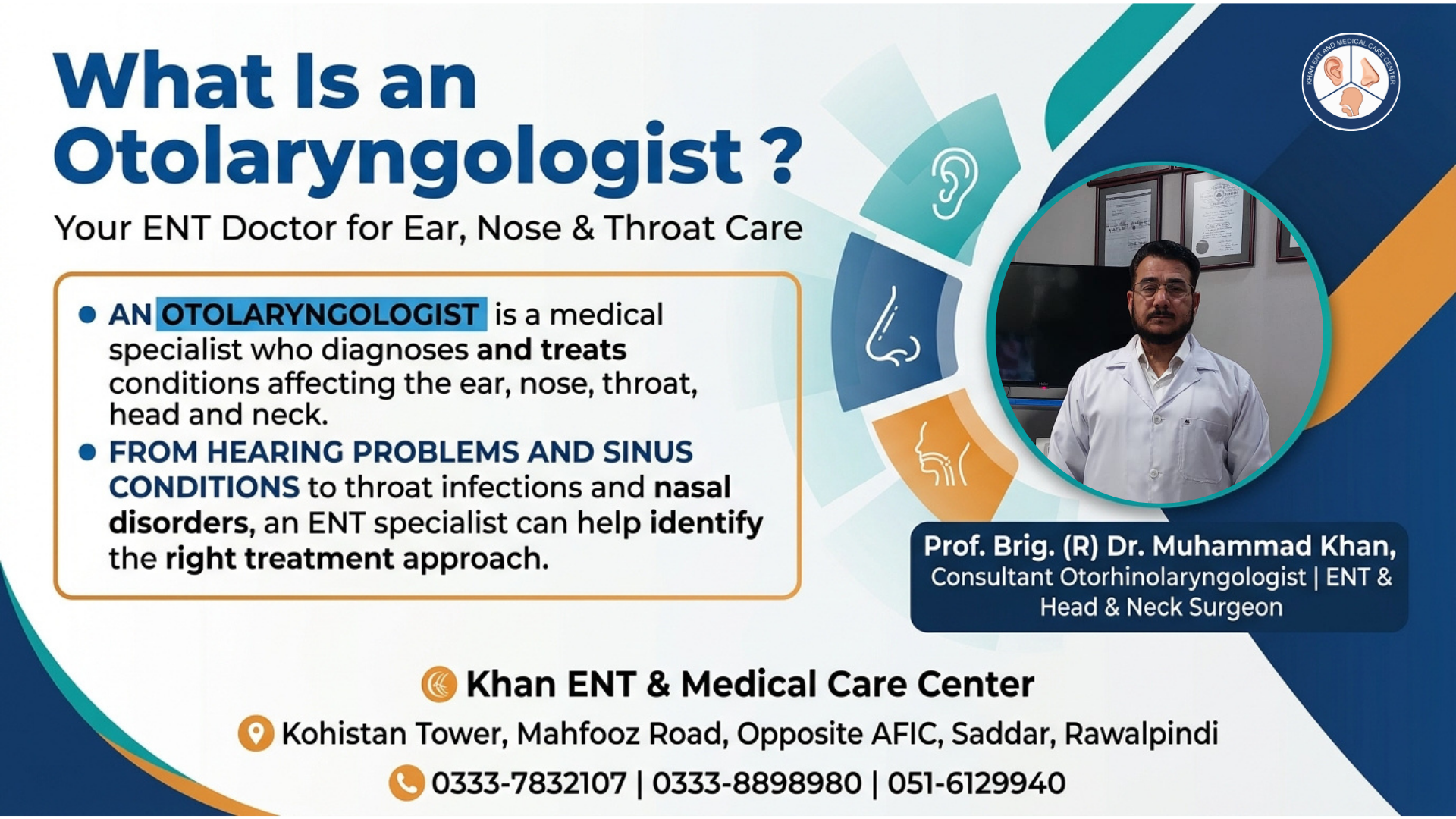
Otolaryngologist is the medical term for a specialist who diagnoses and treats conditions affecting the ear, nose, throat, head and neck.You may also know an otolaryngologist as an ENT doctor or ENT specialist.
An otolaryngologist can evaluate and treat a wide range of problems, including ear infections, hearing difficulties, tinnitus, nasal blockage, sinus problems, nasal allergies, deviated septum, tonsillitis, throat infections, voice problems and other ENT conditions.
For patients searching for an ENT specialist in Rawalpindi, understanding what an otolaryngologist does can help you know when specialist evaluation may be appropriate.
What Does an Otolaryngologist Treat?
An otolaryngologist treats many conditions affecting the ears, nose, throat, head and neck. These problems can occur in children, adults and older patients.
Ear Problems
An otolaryngologist can evaluate persistent ear pain, hearing problems, infections and tinnitus. Ear-related problems are among the most common reasons patients visit an otolaryngologist.
These may include:
- Ear infections
- Ear pain
- Excessive ear wax
- Hearing loss
- Tinnitus or ringing in the ears
- Ear discharge
- Eardrum problems
- Balance and dizziness problems
- Certain chronic ear conditions
Depending on the symptoms, an ENT doctor may examine the ear canal and eardrum, perform hearing assessments or recommend additional diagnostic tests.
If ear pain, hearing difficulty or other ear symptoms continue, an otolaryngologist can help identify the possible cause and recommend an appropriate treatment approach.
Otolaryngologist for Nose and Sinus Problems
An otolaryngologist can assess chronic nasal blockage, sinus problems, allergies and nasal polyps.
The nose plays an important role in breathing, smell, sleep and overall comfort. An otolaryngologist can assess a variety of nasal and sinus conditions, including:
- Chronic nasal blockage
- Deviated nasal septum
- Nasal allergies
- Recurrent nosebleeds
- Sinusitis
- Nasal polyps
- Reduced sense of smell
- Snoring associated with nasal obstruction
A person who has difficulty breathing through the nose for a long time may have an underlying structural or inflammatory problem.
For example, a deviated septum can restrict airflow through one or both sides of the nose. Nasal allergies may cause congestion, sneezing and irritation, while sinus conditions may produce facial pressure, nasal discharge and difficulty breathing.
A detailed evaluation by an otolaryngologist can help determine what may be contributing to these symptoms.
Throat and Voice Conditions
An otolaryngologist also treats many throat and voice problems.
Patients may seek ENT care for:
- Recurrent tonsillitis
- Persistent sore throat
- Difficulty swallowing
- Pain while swallowing
- Enlarged tonsils
- Persistent throat irritation
- Voice changes
- Long-lasting hoarseness
- Snoring and sleep-related breathing concerns
Persistent hoarseness, difficulty swallowing or recurring throat infections should not be ignored. A professional examination can help determine whether further testing or treatment is required.
When Should You See an Otolaryngologist?
You may need to consult an otolaryngologist when an ear, nose or throat problem is persistent, recurrent, severe or interfering with your daily activities.
Consider arranging an ENT consultation if you experience:
- Persistent hearing difficulty
- Repeated ear infections
- Continuous ringing in the ears
- Recurrent dizziness or balance problems
- Long-term nasal blockage
- Frequent sinus symptoms
- Repeated nosebleeds
- Reduced or lost sense of smell
- Recurrent tonsillitis
- Persistent throat discomfort
- Long-lasting hoarseness
- Difficulty swallowing
An ENT specialist can evaluate your symptoms and determine whether you need medication, further diagnostic testing, monitoring or a procedure.
What Happens During an Otolaryngologist Consultation?
During an otolaryngologist consultation, the doctor usually begins by asking about your symptoms, medical history and previous treatment.
The examination then focuses on the affected area.
For ear complaints, the doctor may examine the ear canal and eardrum and may recommend a hearing test when appropriate.
For nasal complaints, nasal examination or nasal endoscopy may be recommended to provide a clearer view of the internal nasal passages.
For throat and voice problems, the doctor may examine the throat and, when clinically necessary, recommend further evaluation of the larynx or vocal cords.
The goal is to understand the cause of the symptoms and develop a treatment plan based on the individual patient's condition.
Does an Otolaryngologist Perform Surgery?
Yes. An otolaryngologist is trained in both medical and surgical management of many ear, nose and throat conditions.
However, surgery is not automatically required for every ENT problem.
The appropriate treatment depends on the diagnosis, severity of symptoms, examination findings and individual patient factors.
Some patients may improve with medicines or other non-surgical treatment, while others may require a procedure or surgery.
ENT procedures may include treatments for certain chronic ear conditions, nasal obstruction, deviated septum, sinus disease, tonsil problems and other conditions.
A qualified otolaryngologist should evaluate the patient before any surgical treatment is considered.
Otolaryngologist vs ENT Doctor: Is There a Difference?
There is generally no major difference between an otolaryngologist and an ENT doctor.
"Otolaryngologist" is the formal medical term for a specialist who treats disorders of the ear, nose and throat and related areas of the head and neck.
"ENT doctor" and "ENT specialist" are commonly used terms for the same type of specialist.
Therefore, if you search online for an ENT doctor, ENT specialist or otolaryngologist, you are generally looking for a specialist in the same medical field.
Finding an Otolaryngologist in Rawalpindi
When looking for an otolaryngologist in Rawalpindi, patients may want to consider several factors before choosing a clinic.
These can include:
- Specialist qualifications
- Relevant clinical experience
- Convenient clinic location
- Available diagnostic facilities
- Appointment accessibility
- Professional clinical environment
- Appropriate follow-up care
For patients living in Saddar, Cantt, Westridge, Rawalpindi and nearby areas, choosing an accessible ENT clinic can make consultations and follow-up visits more convenient.
ENT Care at Khan ENT & Medical Care Center
Khan ENT & Medical Care Center is located at Kohistan Tower, Saddar, Rawalpindi and provides professional ear, nose and throat care.
Prof. Brig. (R) Dr. Muhammad Khan provides evaluation and treatment for a wide range of ENT conditions involving the ears, nose, throat, sinuses and related areas.
The clinic provides assessment for concerns such as ear infections, hearing problems, ear wax, tinnitus, nasal obstruction, sinus problems, nasal allergies, deviated septum, throat infections, tonsil problems and other ENT conditions.
Depending on the patient's symptoms and clinical requirements, diagnostic services may include hearing assessment, nasal endoscopy, video otoscopy and other appropriate ENT evaluations.
Patients can visit the clinic for an assessment when persistent ear, nose or throat symptoms are affecting their health, comfort, sleep or daily activities.
Why Professional ENT Evaluation Matters
Ear, nose and throat symptoms can sometimes appear minor but may continue for weeks, return repeatedly or gradually become more troublesome.
Treating symptoms without understanding their underlying cause may not always provide an effective long-term solution.
An otolaryngologist can assess the complete clinical picture and determine whether the patient needs medication, further testing, monitoring or a procedure.
For example, ongoing nasal blockage may have several possible causes, including allergies, structural problems or sinus disease.
Similarly, hearing difficulties can result from different conditions that require different approaches.
A proper ENT evaluation can therefore help make treatment more targeted and appropriate.
Choosing the Right ENT Specialist
When choosing an ENT specialist, patients should consider the doctor's qualifications, experience, diagnostic capabilities and the overall quality of clinical care.
It is also important to clearly explain your symptoms, how long they have been present and whether previous treatments have helped.
Patients should ask questions about their diagnosis and understand the available treatment options before making decisions about procedures or surgery.
The role of an otolaryngologist is not simply to treat symptoms but to evaluate the underlying condition and guide the patient toward an appropriate treatment plan.
An otolaryngologist is a specialist who provides medical and surgical care for conditions involving the ears, nose, throat, head and neck.
Whether you are experiencing hearing problems, persistent nasal blockage, sinus symptoms, recurrent throat infections, tinnitus, reduced sense of smell or voice changes, an ENT consultation can help identify the possible cause of your symptoms.
If you are searching for an otolaryngologist in Rawalpindi, choosing a qualified specialist with appropriate diagnostic facilities and convenient access can make your healthcare experience easier.
For persistent, recurrent or concerning ENT symptoms, professional evaluation can help you understand your condition and discuss suitable treatment options.
Khan ENT & Medical Care Center
Prof. Brig. (R) Dr. Muhammad Khan
Consultant Otorhinolaryngologist | ENT & Head & Neck Surgeon
Kohistan Tower, Mahfooz Road, Opposite AFIC, Saddar, Rawalpindi
0333-7832107 | 0333-8898980 | 051-6129940